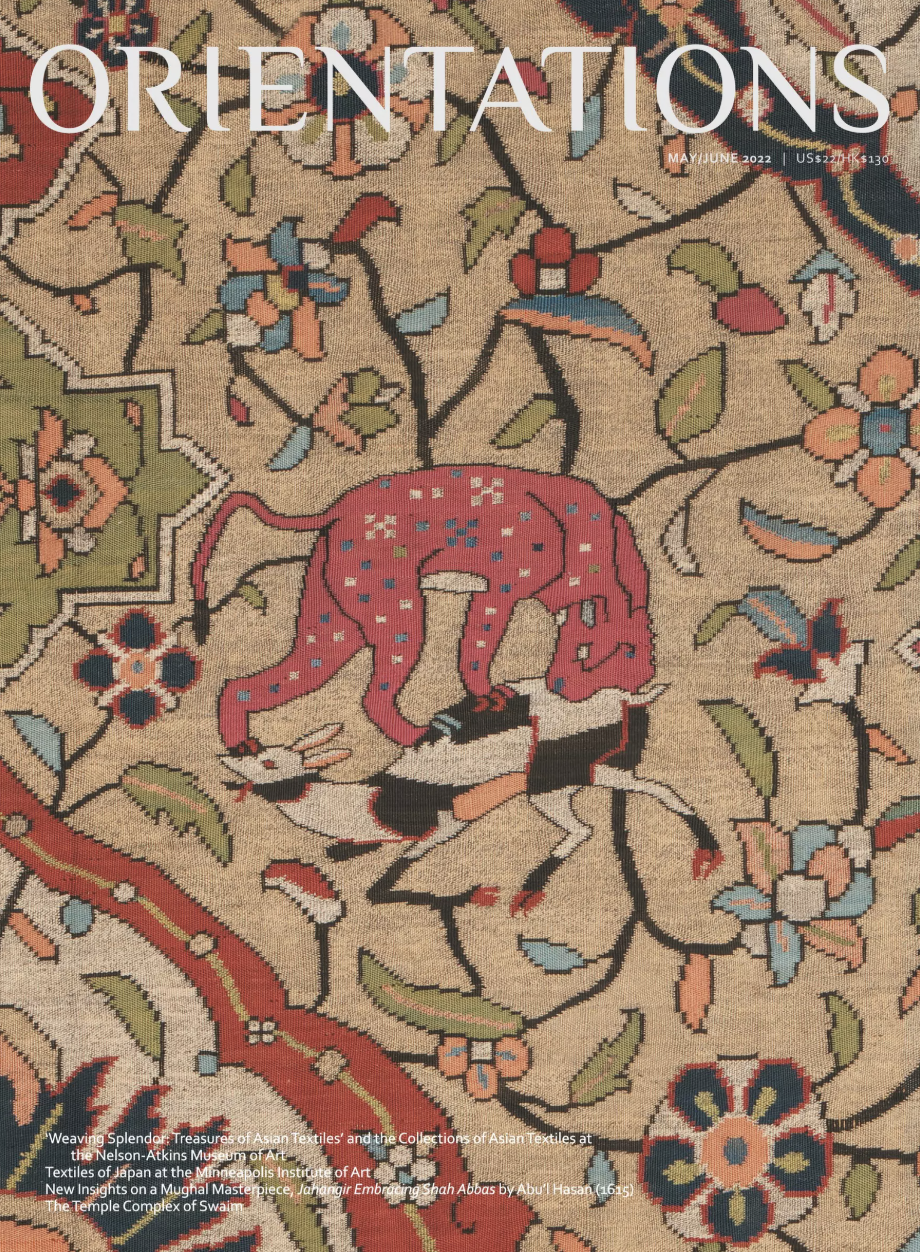
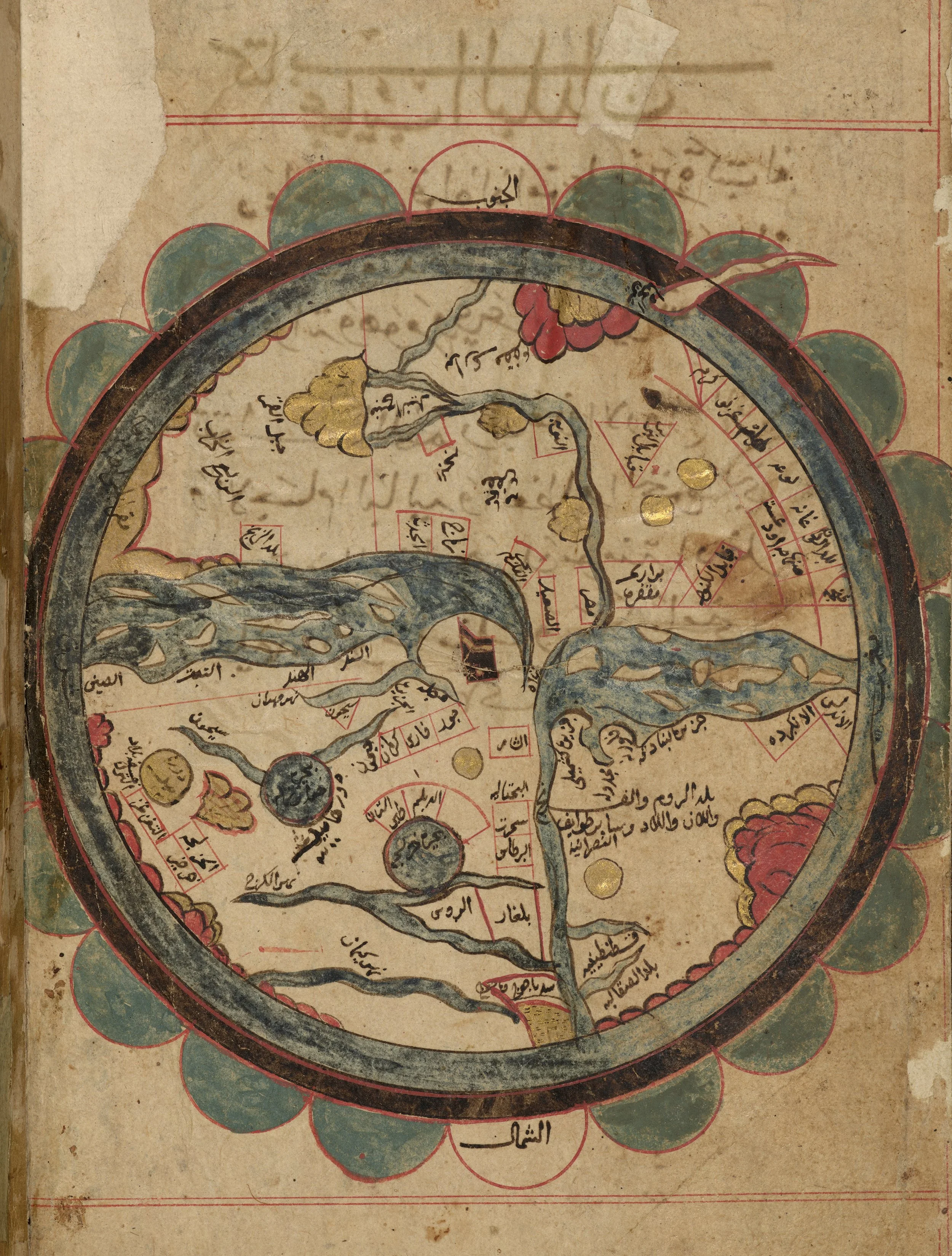
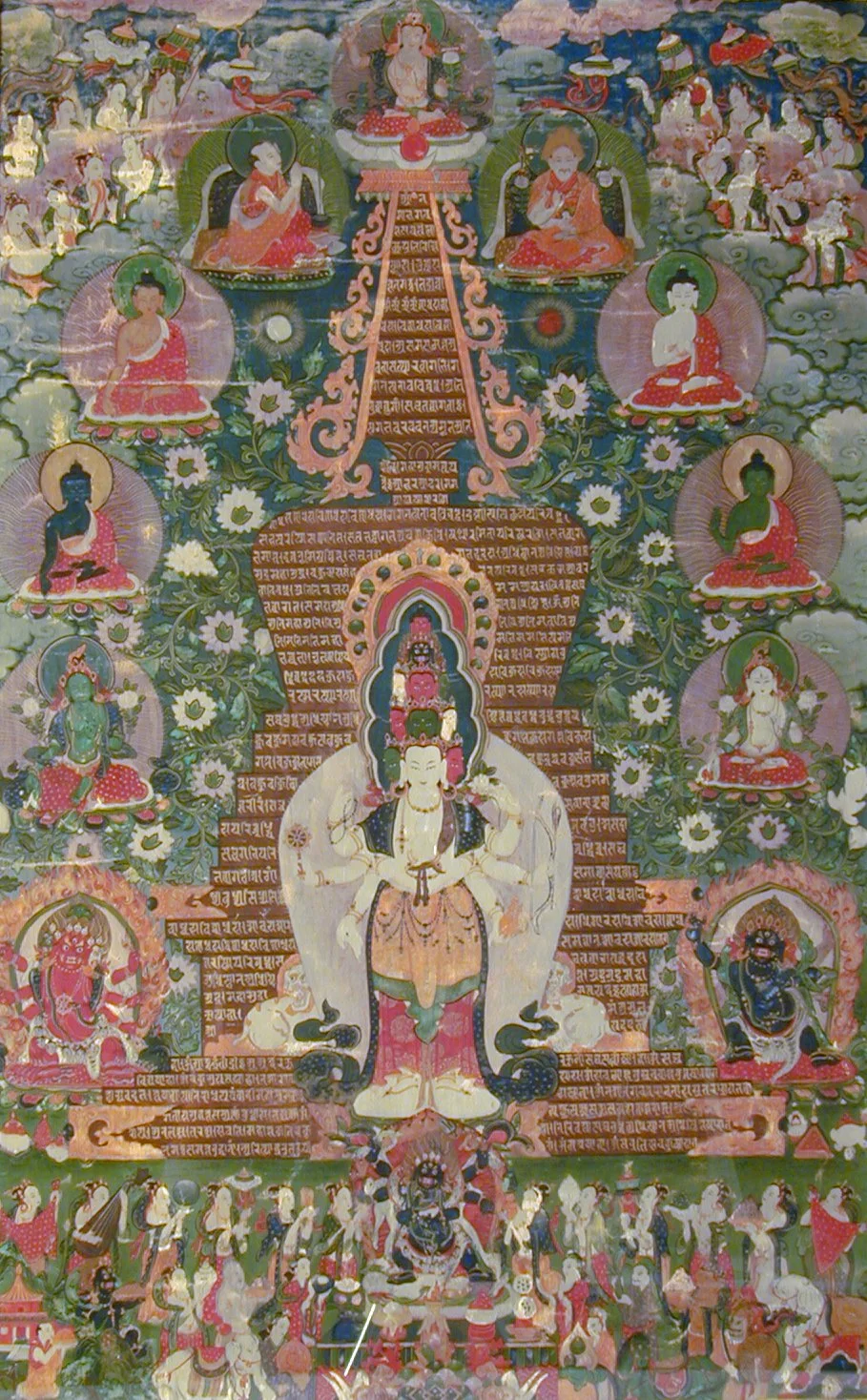
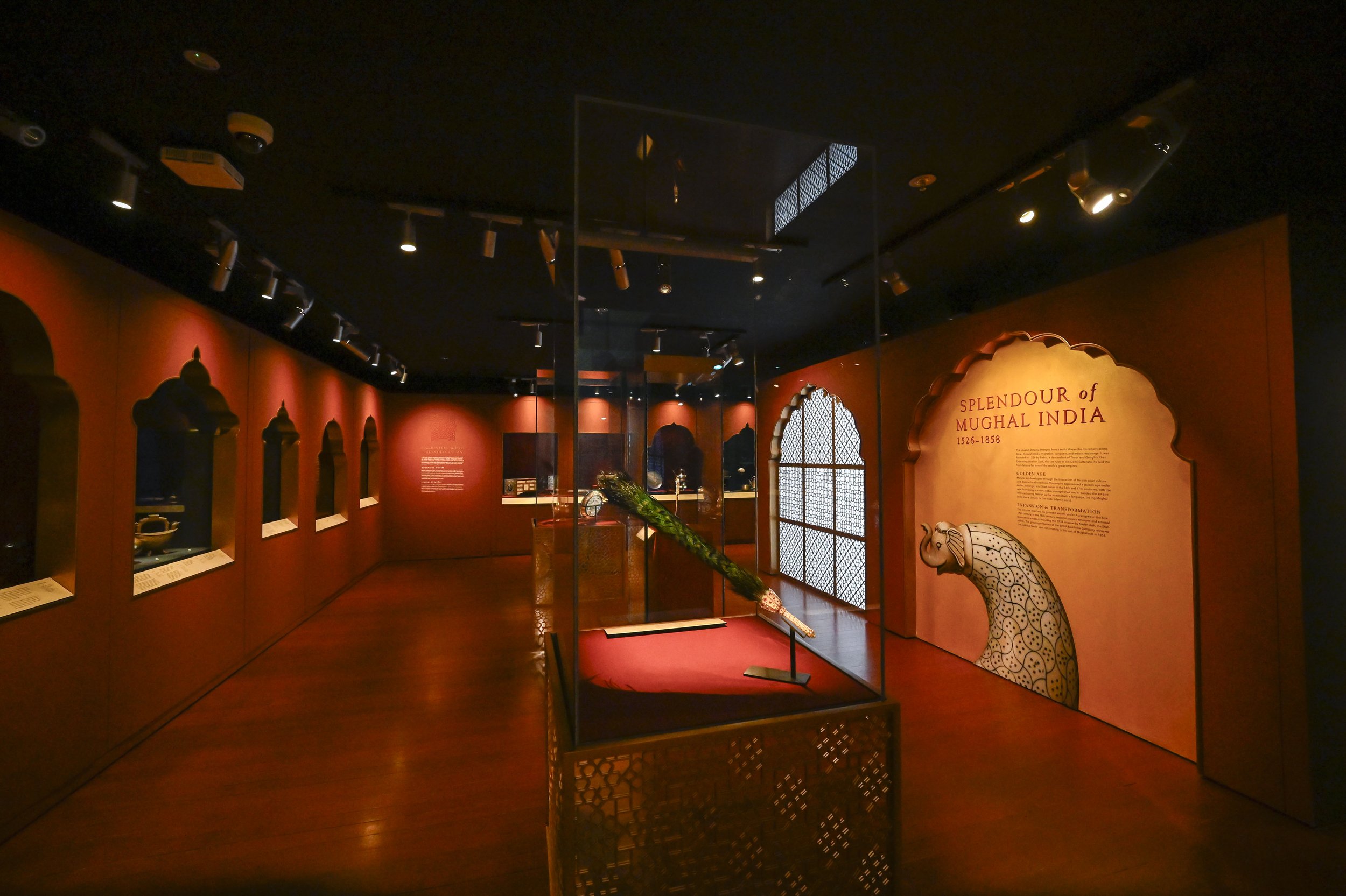
Orientations is a bimonthly magazine published in Hong Kong since 1969 and distributed worldwide. It is an authoritative source of information on the arts of East and Southeast Asia, the Himalayas, the Indian subcontinent, and the Middle East, from the latest scholarly research to market analysis and current news.
Originally conceived as a publication devoted to travel and the culture of ‘the Orient’, the magazine evolved into a scholarly journal on art, architecture, and archaeology over the past decades as the rest of the world became better acquainted with the region. Orientations brings readers stories of interesting people, amazing places, and incredible collections and builds bridges across cultures through the arts.
Now available in both print and digital, Orientations is an essential addition to any library.
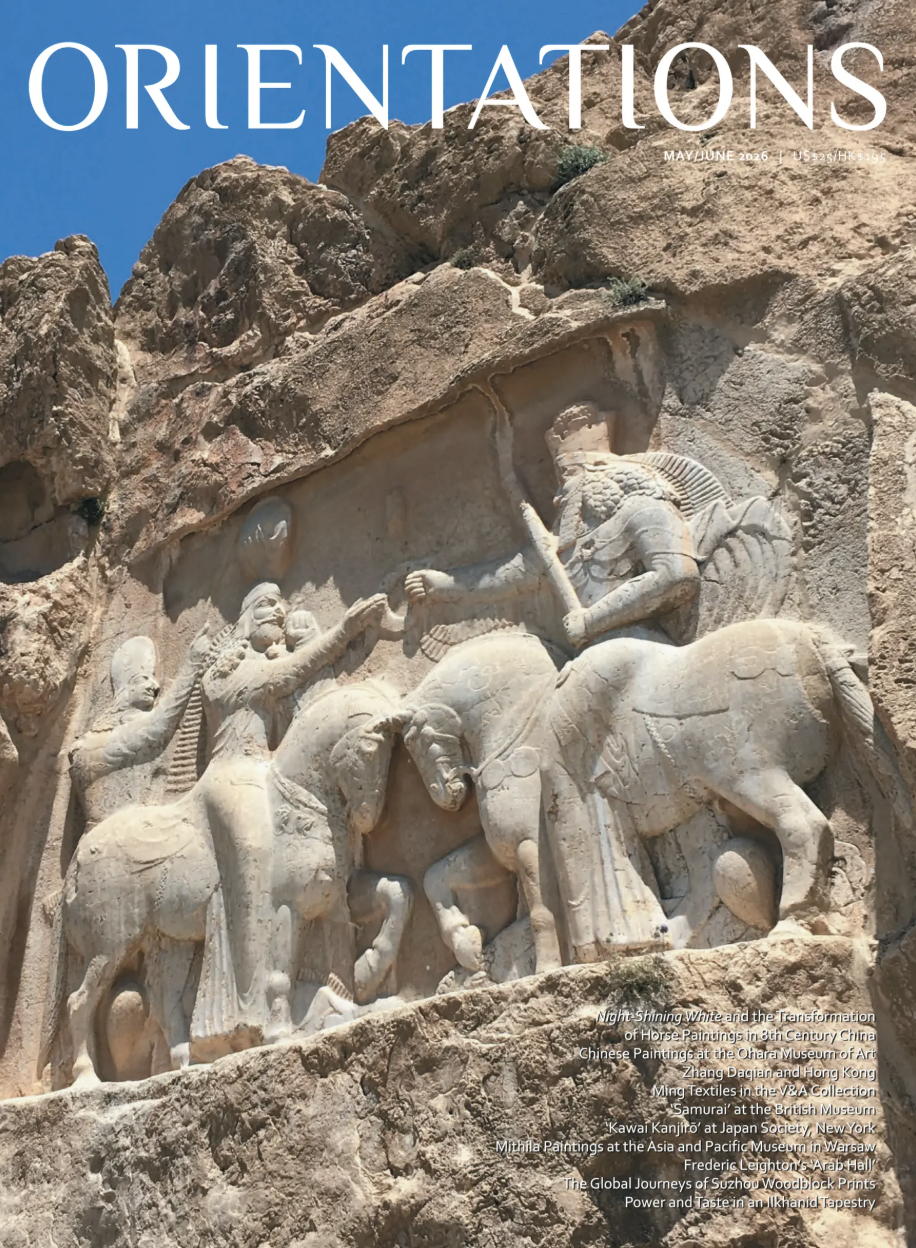
In this issue, we explore the many facets of East Asian and Islamic art, emphasising cultural exchange, artistic transformation, and the lives of objects across borders and centuries. Jin Xu’s study of the Tang dynasty horse paintings Night-Shining White and Man Herding Horses argues that the former represents a deliberate synthesis of Central Asian realism with indigenous Chinese aesthetic priorities—a fusion that marked a transformative moment in 8th century Chinese art.
We then turn to collecting histories and the afterlives of artworks. Itakura Masaaki and Yukio Lippit examine the Chinese painting collection of Japan’s Ōhara family, revealing through technical analysis that their Five Oxen handscroll is a modern forgery by Zhang Daqian, while Shuo Sue Hua traces Zhang’s mid-century networks in Hong Kong, showing how the city served as a critical hub for artistic exchange and documentation during periods of political upheaval.
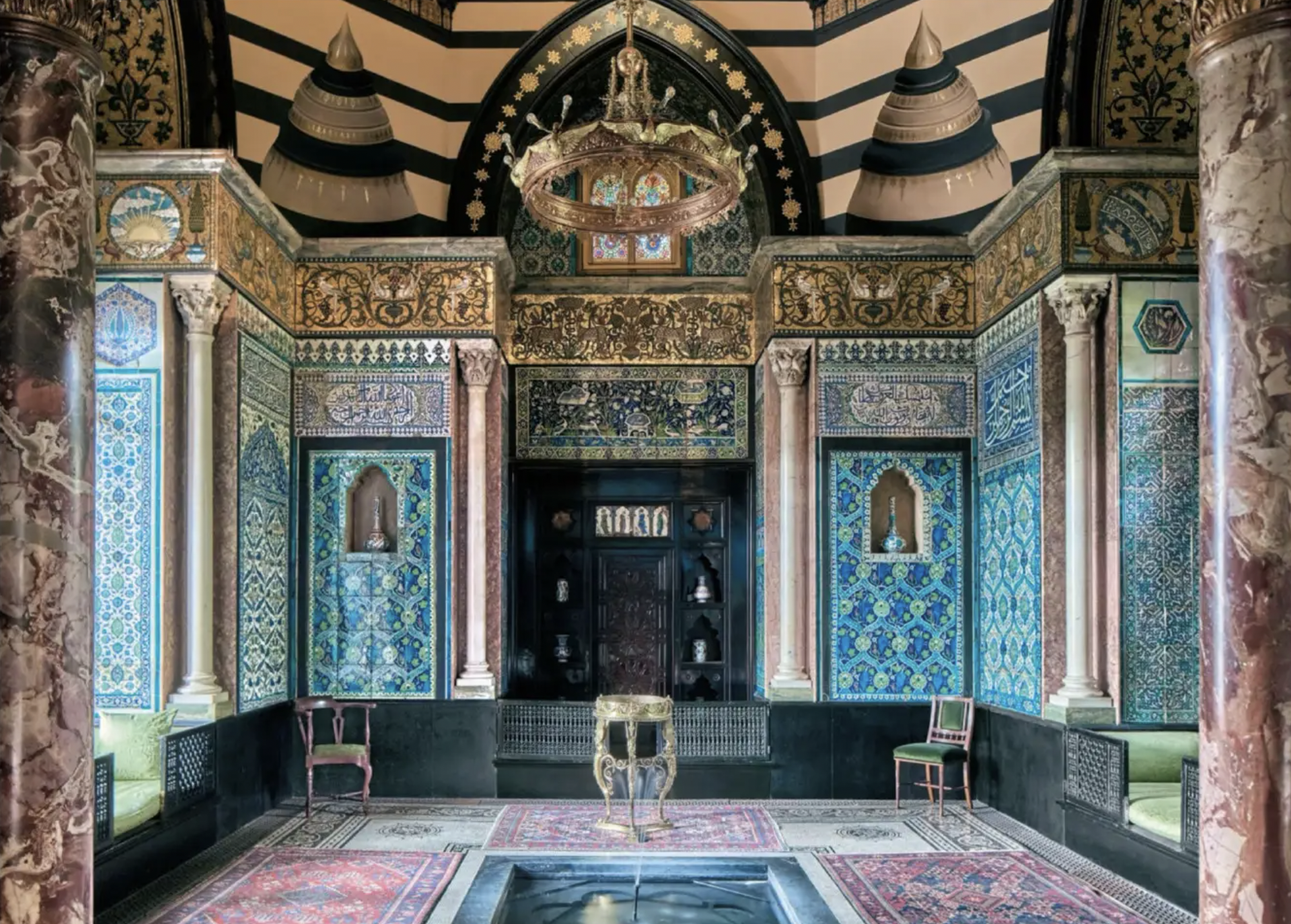
Material culture and craftsmanship are central to Shilei Zeng’s survey of Ming dynasty textiles at the Victoria and Albert Museum, which demonstrates how kesi tapestries, satin damasks, and embroidered vestments embodied imperial authority, Buddhist devotion, and early globalised trade between China and Portugal. Melanie Gibson reconstructs the Islamic art collection of the Victorian painter Frederic Leighton, using archival photographs and exhibition catalogues to piece together a dispersed assemblage of Iznik ceramics, carpets, and tiles that once filled his celebrated Arab Hall.
We next examine the performative and ludic dimensions of art. Joe Nickols discusses how samurai from the Kamakura to Edo periods used portraiture, fantastical helmets, Nō theatre, and even playing cards to project authority and cultural refinement—a tradition of ‘playfulness’ that continues in contemporary video games. Michele Bambling and Tamae Sagi present the first US solo exhibition of the Japanese mingei potter Kawai Kanjirō, tracing his evolution from technical mastery of Chinese glazes to the production of modernist wood sculptures, while emphasising the communal life of his Kyoto home-studio. Barbara Banasik introduces the Warsaw Asia and Pacific Museum’s collection of Mithila painting from Bihar, India, focusing on works produced during the formative ‘Holi colours’ period (c. 1967–88). She analyses stylistic markers, caste-based genres (Bharni, Kachni, Godna), and the challenges of attribution in a commercialising art market.
Finally, one of our two Susan Chen Foundation & Orientations Young Writers Award winners this year is Tong Su, who examines a 14th century Ilkhanid silk tapestry illustrating how Mongol rulers drew on Persian, Sogdian, Chinese, and Assyrian motifs—from lotus blossoms to lamassu guardians. In the tapestry, these motifs form a portable image of universal kingship, where alternating light and dark wefts become metaphors for cosmic order.
Together, these articles show how artistic ideas travel across cultures, how visual styles blend and change, and how collectors, dealers, and artisans actively shape what later generations accept as tradition.

This issue showcases the depth and diversity of Asian art across American museum collections, with articles spanning millennia and multiple artistic traditions. We preview the forthcoming exhibition at the Dallas Museum of Art (DMA) on Japanese metalwork from the Muromachi through Meiji periods, which traces the evolution of metalworking from samurai armour to cloisonné enamels, culminating in the museum’s monumental bronze Dragon King Presenting a Jewel to Fujiwara no Hidezato—a masterpiece of Meiji sculpture.
Edmund de Unger (1918–2011), whose lifelong fascination with Islamic art began at the age of six, inspired by his father’s carpet collection, was the founder and driving force behind the Keir Collection. Through a landmark loan from this collection, the DMA has transformed its presentation of Islamic art, showcasing de Unger’s visionary collecting and shaping the museum into one of America’s most significant Islamic art repositories. We also recount another chapter in collecting history by tracing how the DMA acquired one of the largest collections of postwar Japanese art outside Japan. The Nelson-Atkins Museum is renowned for its collection of Song dynasty landscape paintings. We explore their spiritual and philosophical dimensions, revealing how Daoist concepts of nature and the cosmos shaped works by Xu Daoning, Xia Gui, and Qiao Zhongchang. A companion provenance study traces how these masterpieces journeyed to Kansas City through networks of early 20th century dealers and collectors.
‘Household Gods: Hindu Devotional Prints, 1860– 1930’, an exhibition on view at the Metropolitan Museum of Art until 17 June 2027, introduces a groundbreaking genre focusing on the museum’s rich holdings.
The exhibition ‘Year of the Horse: Hoofbeats Through Time’ at the Minneapolis Institute of Art presents a survey of three millennia celebrating the Chinese zodiac. Through ten thematic lenses—from sacred Bronze Age ritual objects to contemporary photographs by Yang Yongliang.
Finally, we examine Kawanabe Kyōsai’s complex artistic legacy in an introduction to the Suntory Museum of Art’s exhibition drawn from the Israel Goldman Collection.
RECOMMEND TO YOUR LIBRARIAN
Interested in reading Orientations? Recommend our publication to your library by clicking the button below or emailing your school or local library.
HIGHLIGHTS
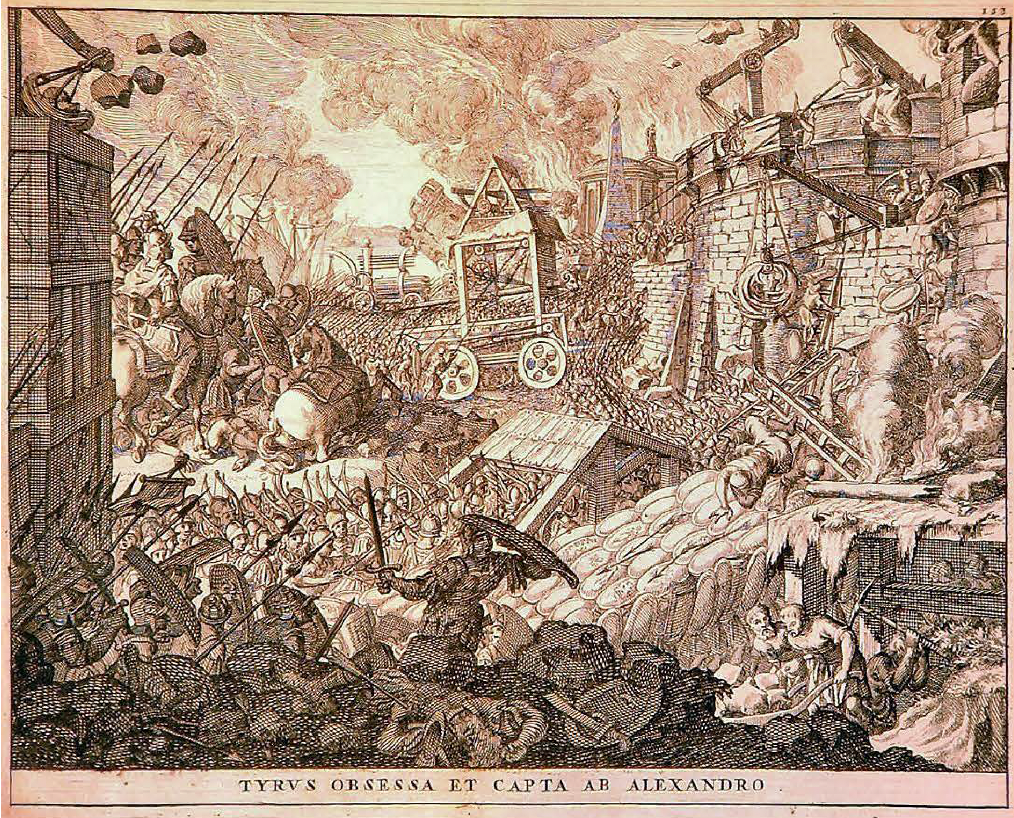
In 332 BCE, Alexander the Great conducted a six-month siege of Tyre, in what is today southern Lebanon. The Kingdom of Tyre, then a client state of the vast Persian Empire, was concentrated on this major port city, which consisted of two parts: a coastal settlement, Old Tyre, and an island one kilometer from the shore.
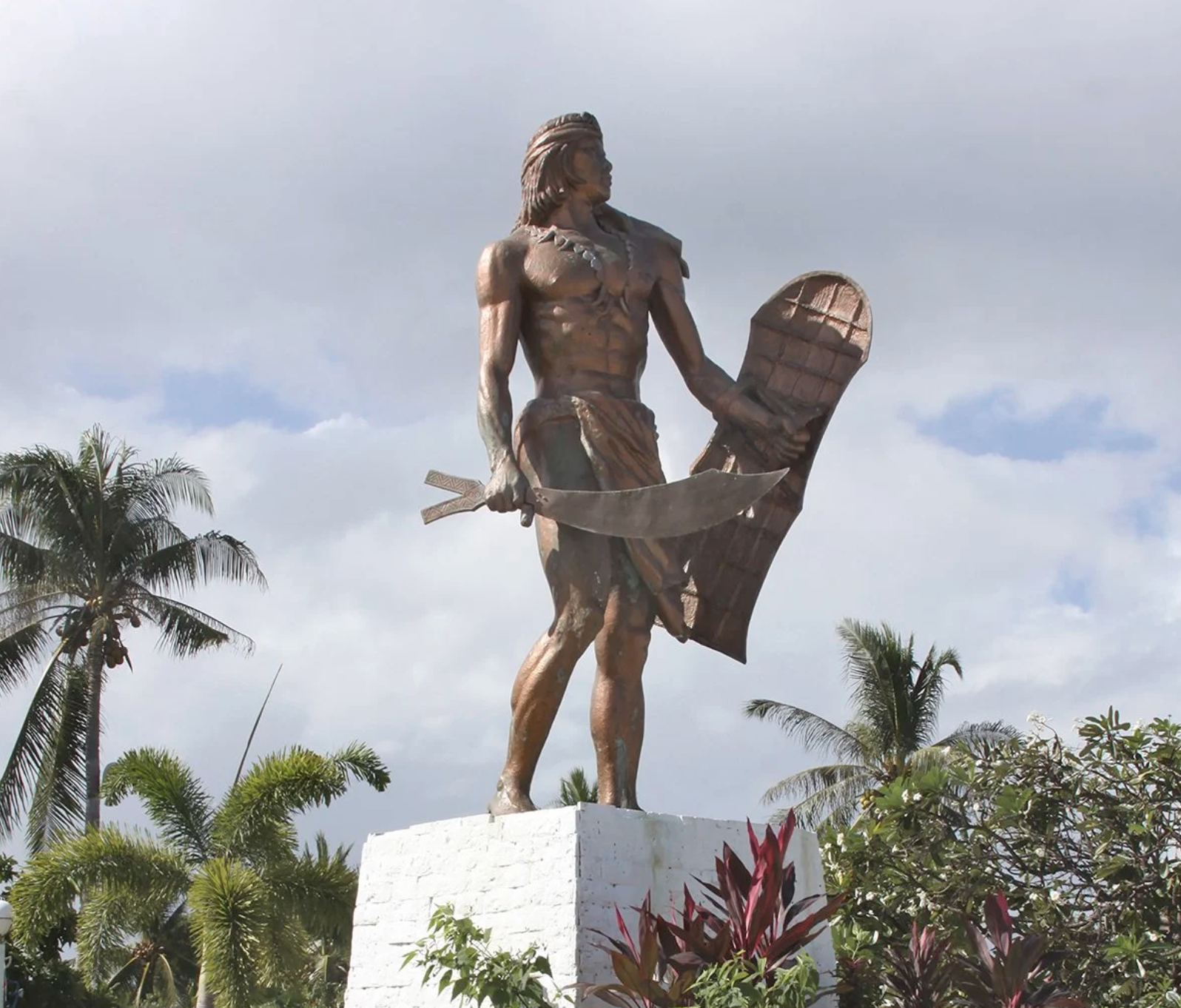
On Mactan Island in the Visayas region of the Philippines stands a 20-meter bronze statue of Datu Lapu Lapu (fig 1), who is celebrated as the first Filipino hero. Staring off to the Magellan Bay, he stands triumphantly with his right foot slightly bent and holds a curved kampilan on his right hand and a shield on his left.
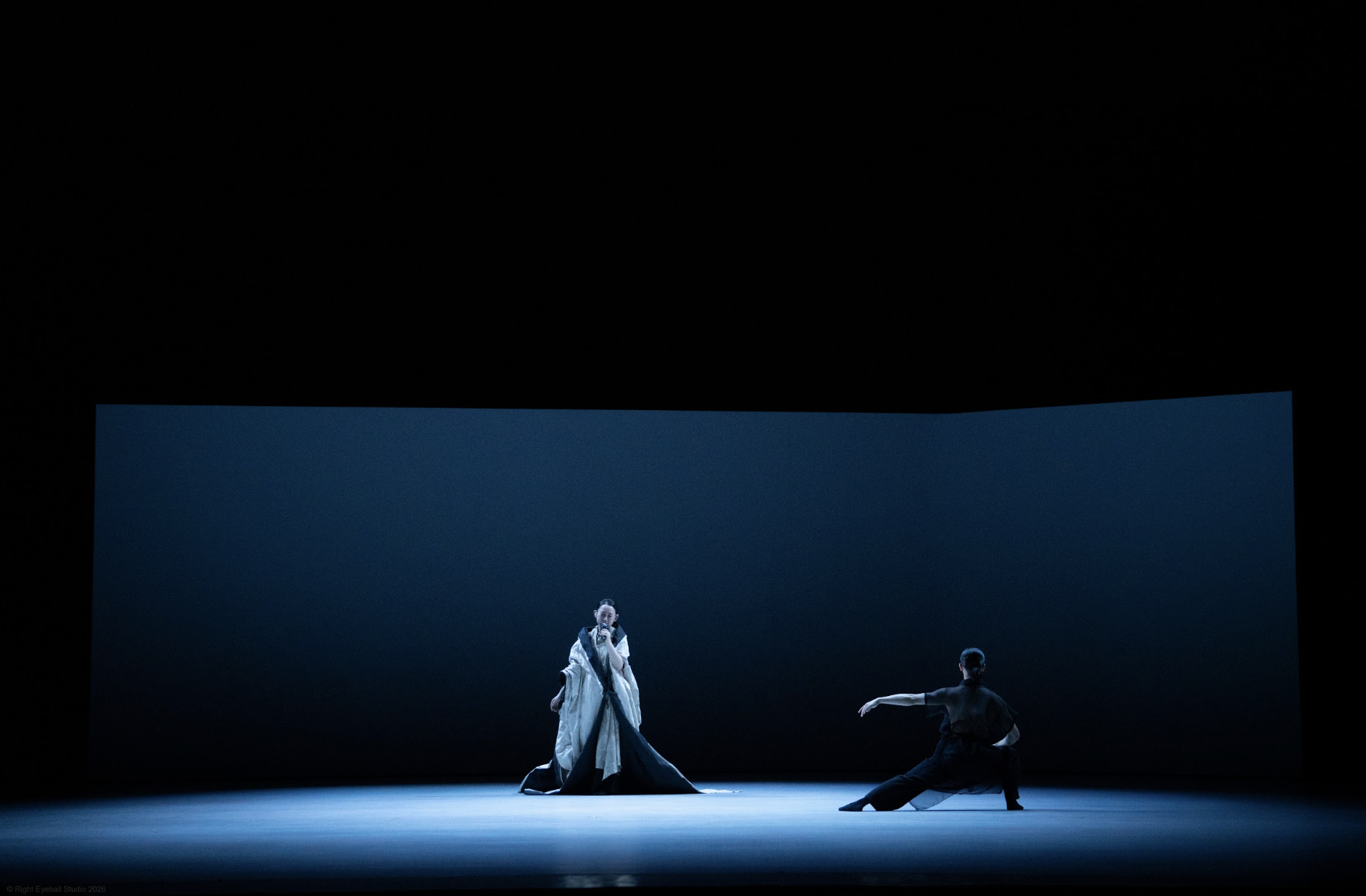
In Between — Wu Guanzhong's Ink Odyssey sponsored by the Wu Guanzhong Art Sponsorship marks the second collaboration between the Hong Kong Museum of Art and Hong Kong Dance Company, once again, through the language of dance, the production celebrates the legacy of twentieth-century Chinese master Wu Guanzhong and honours his close relationship with Hong Kong.
The Victorian artist Frederic Leighton (1830-96) is primarily celebrated for his art and for the building of an exquisite 'Arab Hall' in his London studio house (fig. 1). His role as an important collector of Islamic art has not been well understood, and for good reason-after his death, his private art collection, which included hundreds of ceramics, textiles, and carpets from around the Middle East, was entirely dispersed.
The exhibition ‘Staging the Supernatural: Ghosts and the Theater in Japanese Prints’ is currently on view in Washington, DC, at the Smithsonian’s National Museum of Asian Art (NMAA; 23 March–6 October 2024). The origin of the exhibition dates back more than fifteen years but was buoyed into reality by two major acquisitions. The idea for a ghost-themed exhibition first came about while we were studying at the Inter-University Center for Japanese Language Studies in Yokohama in 2009 and 2010.
A painter and sculptor of historical and classical subjects, Frederic Leighton achieved fame and success at a young age. His large painting Cimabue’s Sacred Madonna Carried in Procession through the Streets of Florence, completed in Rome in 1855, was considered one of the best pictures of the year at the Royal Academy of Arts in London and subsequently caught the attention of Prince Albert and Queen Victoria, who bought it for the considerable sum of 600 guineas (approximately £83,000 in today’s currency).
The year 1757 witnessed not only the victory of the British East India Company (EIC) at the Battle of Plassey and the subsequent conquest of Calcutta, but also the establishment of Canton as the sole legal port of the Qing dynasty (1644–1911) open to official trade with the West, under the ‘single port commerce system’ of the Qianlong emperor (r. 1736–95). Decades later, a gilded porcelain coffee pot with an underglaze-blue design of the Calcutta waterfront exemplifies the convergence of these two events, intertwining the narratives of the EIC, Calcutta, and Canton (Guangzhou).
The composite or full-form rubbing (quanxing ta) emerged in response to the methodological imperatives of antiquarianism in the late 18th to early 19th century of the Qing dynasty (1644–1911). The pursuit of precision—a byproduct of China’s engagement with Western science and indigenous intellectual movements—infiltrated the century’s antiquarian agenda and its historiography.
The seventh day of the seventh lunar month is one of the most significant dates in the Chinese traditional calendar. It is known as Double Seven day. The annual meeting of the two mythological lovers, the Herd Boy and the Weaving Maid, otherwise separated by the Heavenly Han River (the Milky Way), occurs at this time.
Between January 9 and 18, 2025, forty scholars participating in the first International Winter School on Gandharan Buddhism representing fourteen countries and twenty institutions had the rare opportunity to visit some of the historic sites of ‘Greater Gandhara’, a region that includes Taxila, the Peshawar basin, and Swat in northwest Pakistan. Although not a specialist in Gandharan art, I was fortunate to be able to join the group for an eleven day study trip that brought me full circle, having begun my graduate school studies in the 1970s under Benjamin Rowland and John Rosenfield, both American scholars of Gandharan art. At that time, the study of Buddhist art was based largely on fragments of narratives of the Buddha’s life or on iconic images of buddhas and bodhisattvas of lost or unknown provenance housed in museums.
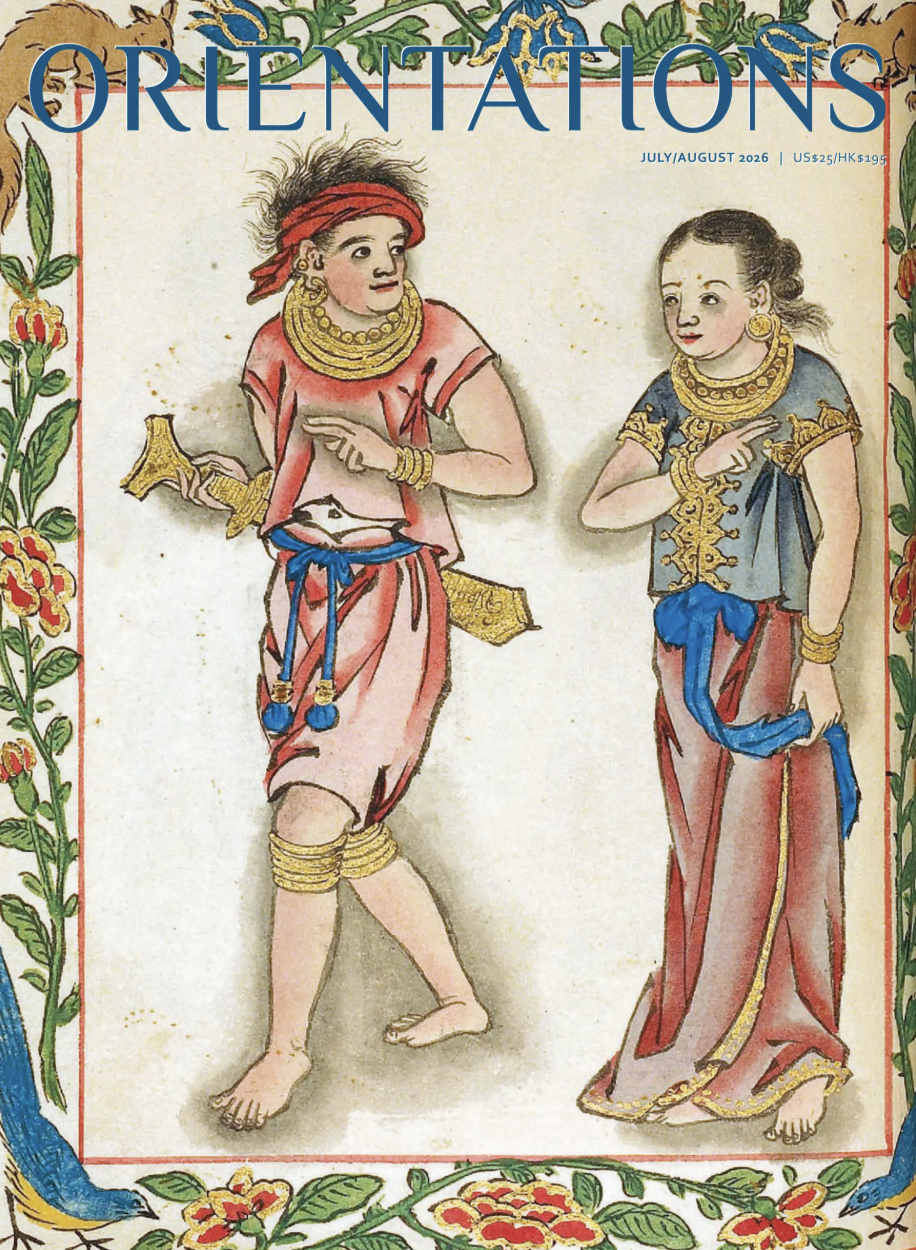
This issue gathers articles that examine Asian art and material culture through specific case studies spanning the contested legacies of American colonial collecting in the Philippines, medieval Javanese bronze casting, and contemporary Korean fabric architecture. Together, they challenge conventional narratives of stylistic influence, cultural ownership, and transcultural exchange by attending closely to how objects were made, moved, collected, and reimagined across time and space.
Jim Moss, Bryan Miller, and Tiffany Fryer examine the University of Michigan’s 1922–25 Philippine Expedition, tracing how American imperial ambitions shaped the accumulation of Chinese ceramics and Indigenous Filipino materials while highlighting contemporary reparative efforts to reconnect these collections with descendant communities. Victor Estrella complements this with microscopic analysis of gold artefacts from the same expedition, revealing sophisticated local artisanry long obscured by colonial frameworks.
Yuheng Zhang’s study of celadon trade ceramics shows how Philippine sites became crucial nodes in maritime networks spanning China and Southeast Asia. Transcultural mimesis emerges as a central theme. Stella Wu analyses a Chinese reverse-glass painting of the Indian nawab Shuja-ud-Daula and his sons, tracing the image’s migration from a British artist through Indian painters to Cantonese workshops—and eventually to American collections—in a triangular relay that unsettles simple narratives of colonial visual dominance. Sizhao Yi examines a miniature Qing ivory book carved with Du Fu’s poem on the ‘Eight Drinking Immortals’, revealing a sophisticated interplay between materiality, text, and the embodied experience of reading.
The issue also features new research on South and Southeast Asian religious art. Gerald Kozicz and Di Luo revisit Robert Heine-Geldern’s 1925 study of the Heidsieck collection of Javanese bronzes, recovering both a remarkable corpus of Buddhist metalwork and the biography of a displaced scholar. Chaitanya Sambrani offers an introduction to Vishnu’s avataric forms across fifteen centuries of South and Southeast Asian art, framing these transformations within the devotional bhakti tradition.
Hongjiao Yang presents newly attributed self-portrait sculptures of the Tenth Karmapa, Choying Dorje, evidencing the 17th century master’s synthesis of Himalayan and Chinese styles. Stephen Little surveys the newly opened David Geffen Galleries at the Los Angeles County Museum of Art, where innovative installations—from a monumental 12th century thangka to Do Ho Suh’s fabric recreation of a Joseon palace hall—embody a curatorial vision prioritising connection, experimentation, and the dismantling of traditional hierarchies.
We also interview Wu Keyu, son of Wu Guanzhong, to highlight the significant donations of his father’s works to the Hong Kong Museum of Art.