
A Wu Guanzhong for Every Heart: In Between — Wu Guanzhong's Ink Odyssey
Nadia Sheung-ying Lau
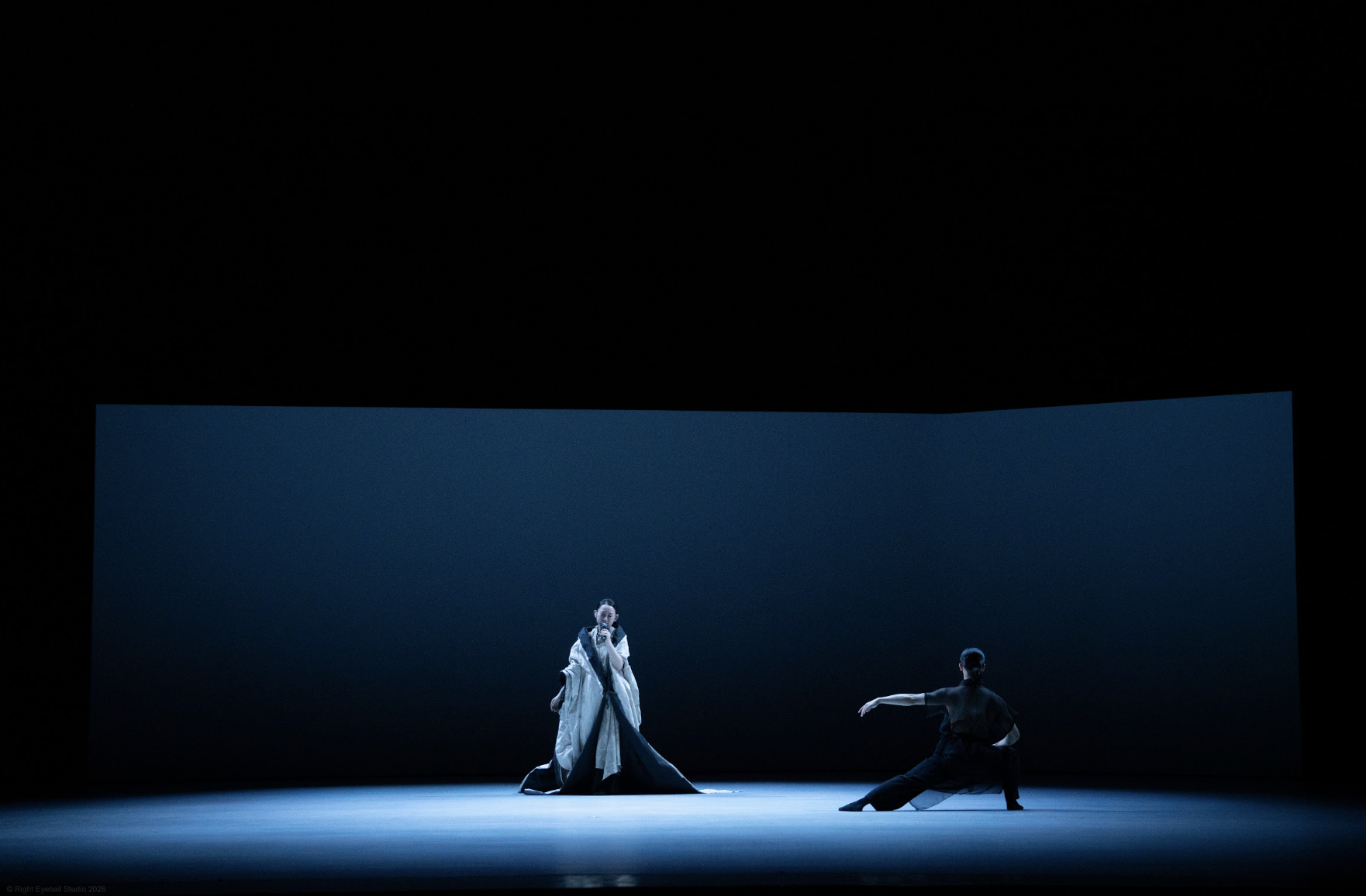
Ivana Wong and dancer Ong Tze Shen in the Prologue—First Stroke.
Photo courtesy of Hong Kong Dance Company
Photo by Carmen So
In Between — Wu Guanzhong's Ink Odyssey sponsored by the Wu Guanzhong Art Sponsorship marks the second collaboration between the Hong Kong Museum of Art and Hong Kong Dance Company, once again, through the language of dance, the production celebrates the legacy of twentieth-century Chinese master Wu Guanzhong and honours his close relationship with Hong Kong.
Wu Guanzhong was famous for blending Chinese and Western art traditions. Born in Yixing, Jiangsu, he attended the National Arts Academy of Hangzhou, learning from great masters such as Lin Fengmian, Pan Tianshou, and Wu Dayu. He won a national scholarship to study in France in 1947, returning to China in 1950. From then on, Wu devoted his entire life to bridging traditional Chinese ink painting and modern Western aesthetics. He also championed art education through his paintings and essays, making enormous contributions to modern Chinese painting.
More than a simple path, the title ‘Wu Guanzhong’s Ink Odyssey’ speaks to an epic voyage of the soul. Embedded within it is his wholehearted dedication: returning to his homeland after studying abroad, enduring years of hardship and maintaining the unyielding devotion that defined his creative life. Ultimately, it was this treacherous path that won him international recognition and cemented his enduring legacy.
Moving away from mirroring Wu’s work with faithful clarity and tracing the recognisable elements seen in their previous production, Two Swallows: Ode to Wu Guanzhong, Artistic Director Yang Yuntao adopts a distinctly more abstract vision for In Between. Abandoning reified images, he chooses instead to dance the very spirit of the man. Coupled with Ivana Wong’s atmospheric music, lighting and visual design by French artists Dominique Drillot and Sophie Laly and the stage and costume design by local talent Wong Yat Kwan and Cindy Ho, the performance becomes a soaring, cross-cultural meditation woven from movement, music, light, and shadow.
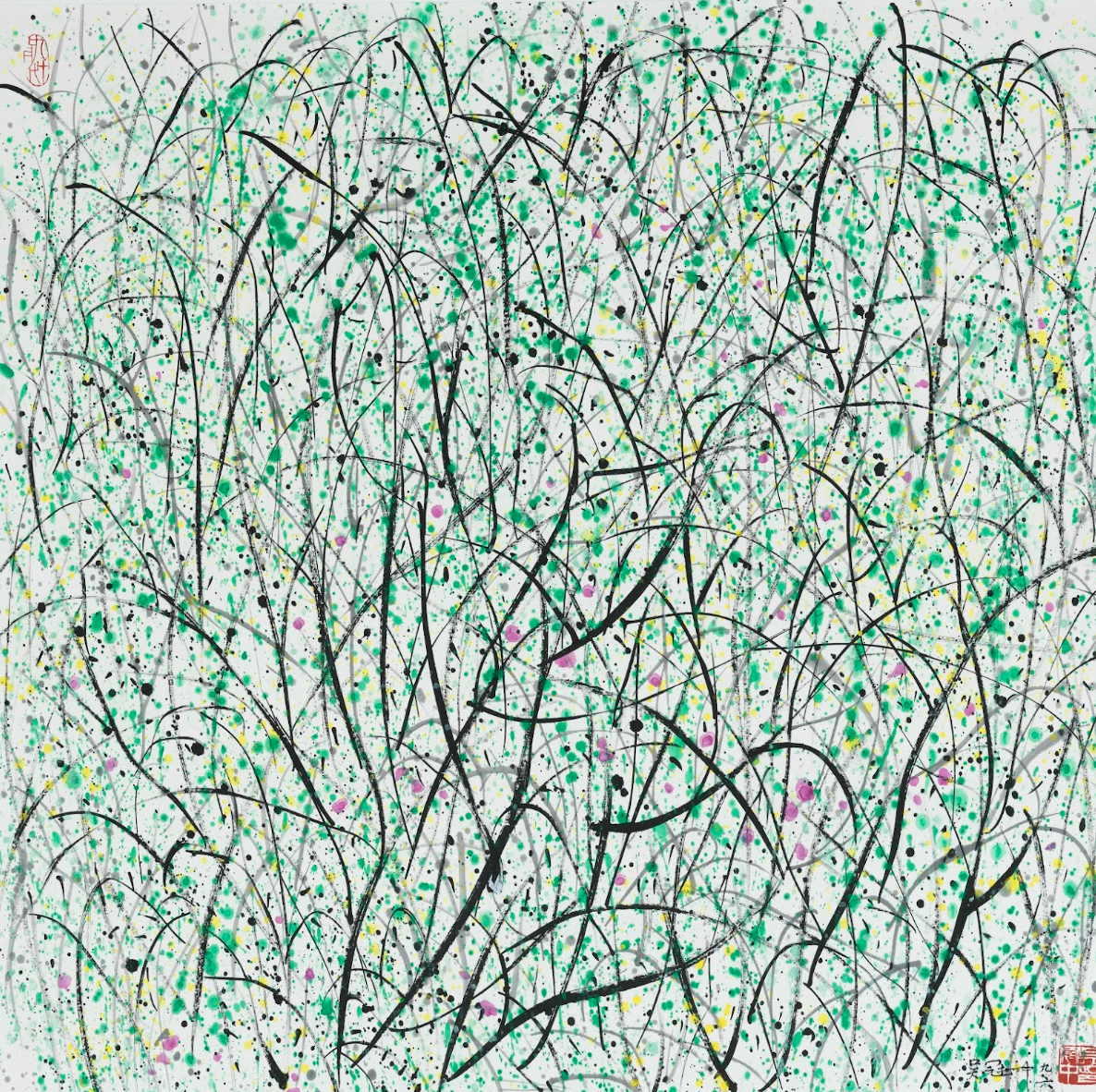
Spring Tide
By Wu Guanzhong (1919–2010); 1996
Ink and colour on paper; 70 x 70 cm
Collection of Hong Kong Museum of Art
Donated by Mr Wu Guanzhong and his family (FA2018.0108)
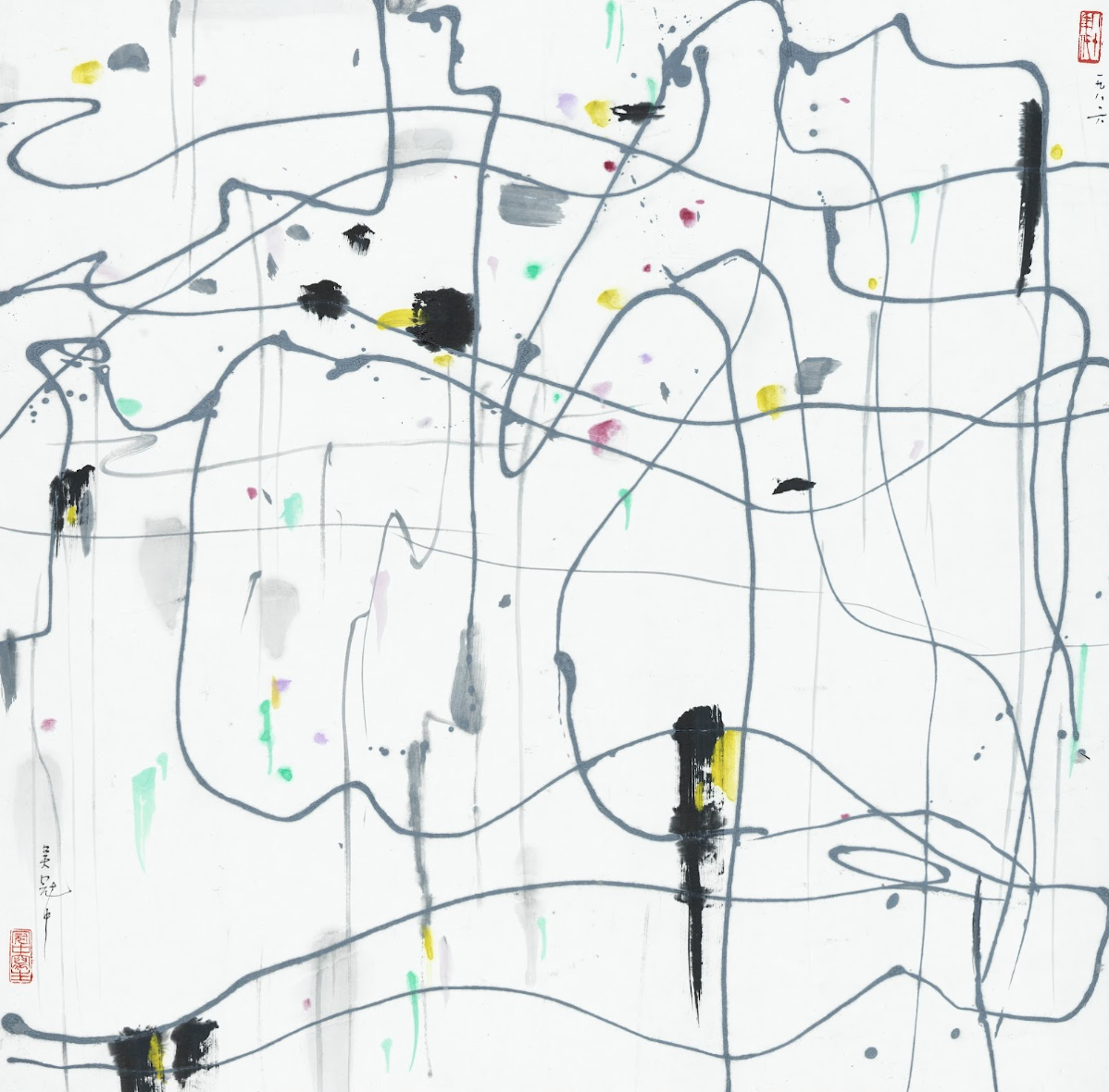
The Music Note of Spring
By Wu Guanzhong (1919–2010); 1986
Ink and colour on paper; 67 x 68.2 cm
Collection of Hong Kong Museum of Art
Donated by Mr Wu Guanzhong and his family (FA2018.0082)
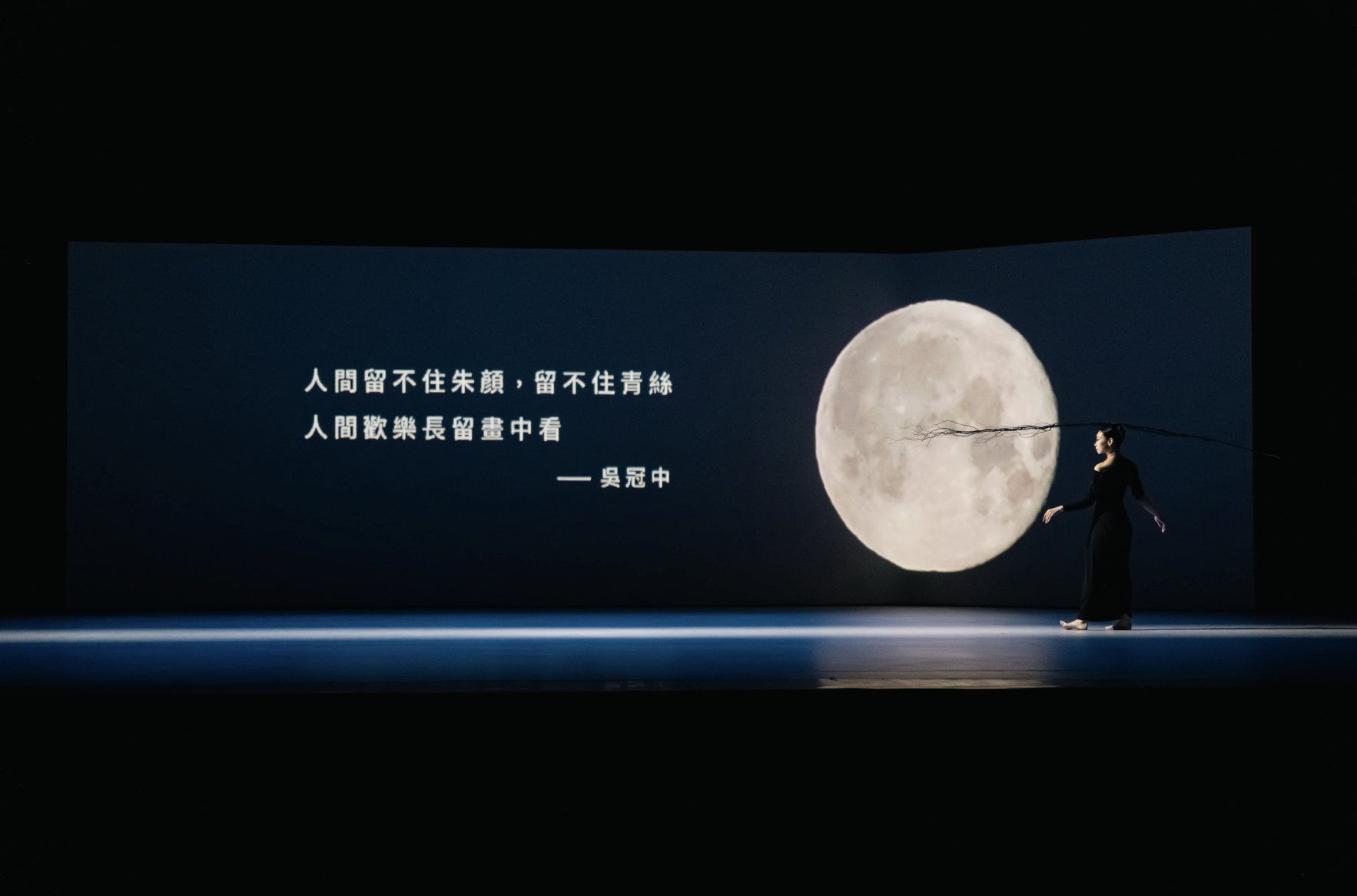
Projection of a massive full moon in the first scene ‘Threads of Spring.’
Photo courtesy of Hong Kong Dance Company
Photo by Kenix Chan
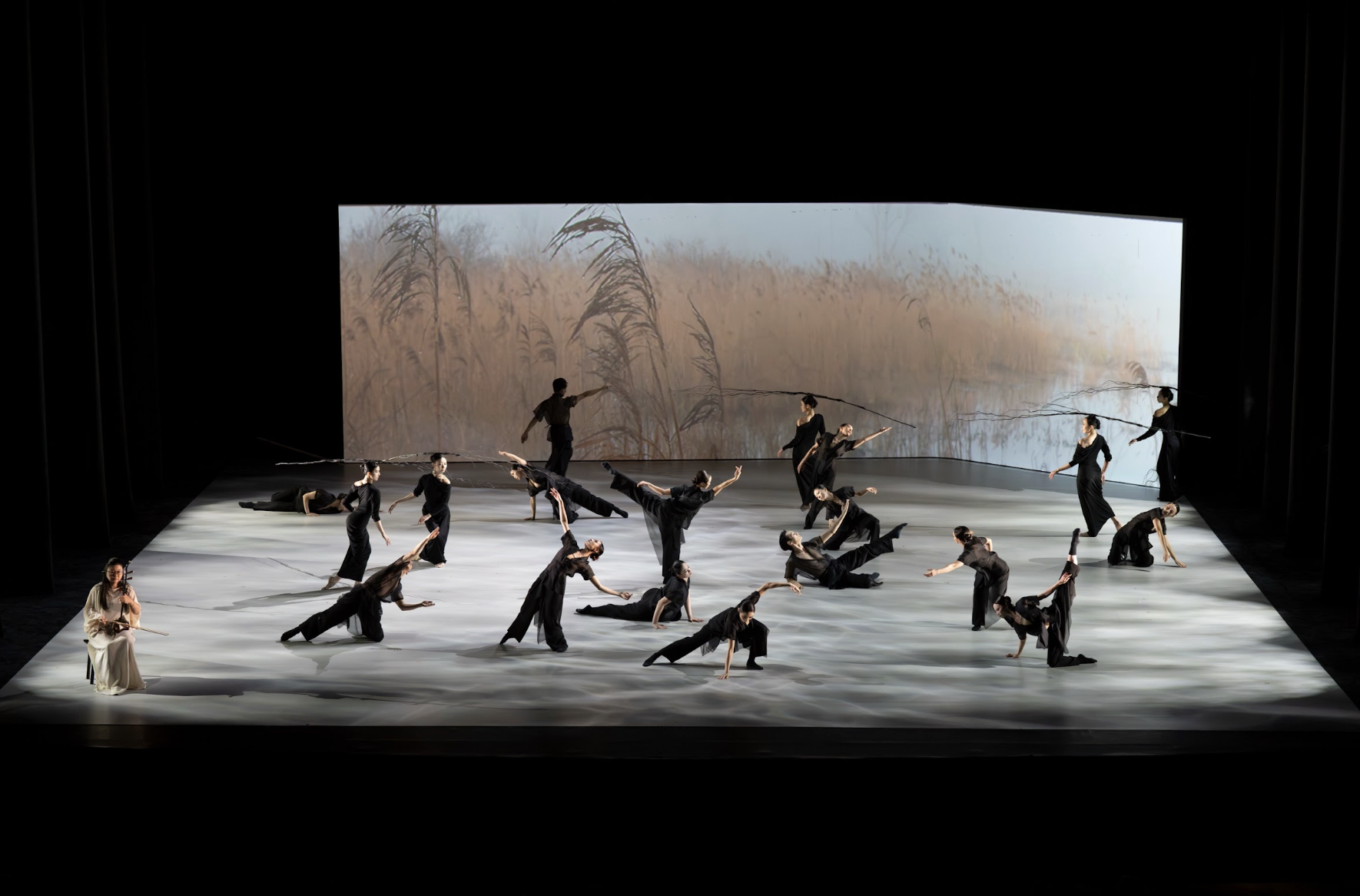
Zhou Yi's erhu performance accompanying the dancers' movements against a projection of swaying reeds in the first scene.
Photo courtesy of Hong Kong Dance Company
Photo by Henry Wong@S2 Production
In the Prologue, before the stage is lit, the bare sound of breathing serves as an opening note, bringing a raw, human intimacy to the theatre. Yet, this breath carries a fragile weight, evoking a personal, perhaps unintended feeling of a life fading on a deathbed. Breaking this heavy tension is the haunting hum of Ivana Wong. As her voice echoes, dancer Ong Tze Shen emerges, moving as if drawn out by the melody itself. Watching the solitary figure drift alongside that lingering hum, one feels the deep, quiet isolation of Wu Guanzhong’s dedicated artistic life.
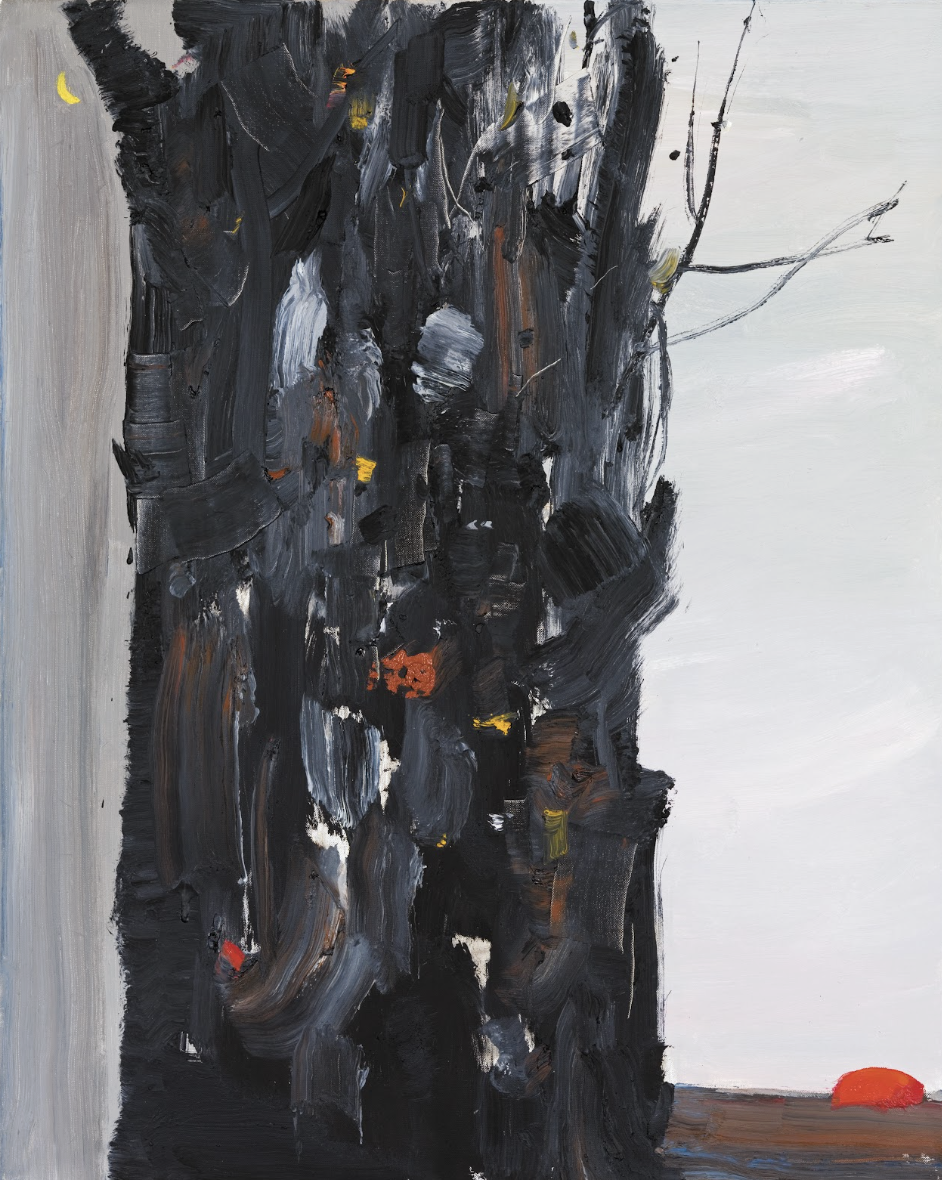
Day and Night
By Wu Guanzhong (1919–2010); 2009
Oil on canvas; 100 x 80 cm
Collection of Hong Kong Museum of Art
Donated by Mr Wu Guanzhong and his family (FA2009.0091)
Then, against the minimalist backdrop of a stark white wall and floor, more dancers enter in fluid, floating black attire. Together, they become living splashes of ink on Xuan paper, tracing the lines of Wu Guanzhong’s odyssey. When the humming fades, the dancers pause to look back. This moment feels as though Wu himself were rising from that final bed to cast a quiet, reflective glance over his life and his art.
While the first scene's title, ‘Threads of Spring’, recalls Wu Guanzhong’s painting series of the same theme known for its twisting lines and green dots representing the sprouting plants of the season, its true meaning reaches much deeper. Rather than evoking warmth and happiness, there is a distinct sense of melancholy underscoring his spring paintings, shadowed by an awareness of time passing. Wu used lines to express the fleeting, transient beauty of the season. It was a quiet acceptance of how quickly youth and vitality slip away into the inescapable flow of time.
Dancers slowly enter the stage with twisted willow branches propped upon their heads, moving with deliberate grace. Silhouetted against a projection of a massive full moon and swaying reeds, their performance is elevated by Zhou Yi’s erhu accompaniment. The music imbues the space with a melancholic beauty and a distinct hint of Chinese philosophy, speaking to Wu’s understanding of time and the cosmos. Just as Wu painted the sun and the moon to reflect the endless flow of time: spring returns, but youth does not. Yet, he believed that while time fades, his art would endure. As Wu himself wrote regarding Threads of Spring: ‘The world cannot stay the rose of youth, nor cling to the dark silk of hair. As the pigments burn with life, we sing, we dance amidst a flurry of falling colours. Let the world’s fleeting joy find an eternal home within the painting.’ Suspended above it all, the moon invites the audience to imagine Wu's personal journey in art, vast and lonely as the cosmos, while the waving reeds softly echo the sorrow of fleeting youth.
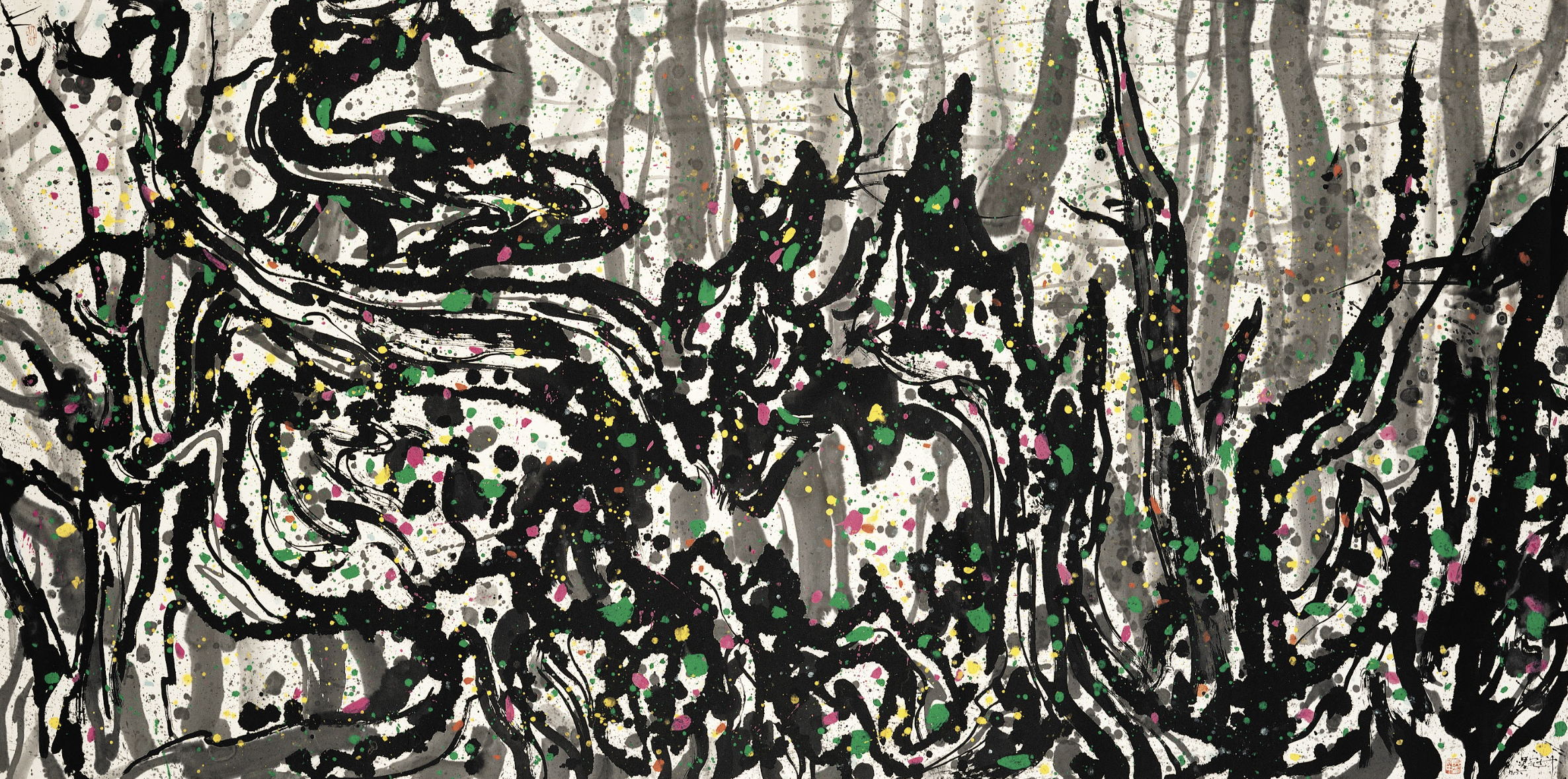
Forest of Old Trees
By Wu Guanzhong (1919–2010); 1996
Ink and colour on paper; 122.8 x 247.2 cm
Collection of Hong Kong Museum of Art
Donated by Mr Wu Guanzhong and his family (FA2002.0007)
This evolutionary journey of expression is translated into the second scene. It opens with eight male dancers holding and crossing one another, coalescing into the form of twisting trees. Slowly, this structure deforms and dissolves. Executing powerful martial arts-based movements, the dancers channel a strength that resembles the forceful lines Wu used to capture nature on an abstract, spiritual level. The choreography highlights the rhythm and vitality of weather-beaten, twisting trees, embodying Wu's transition from realistic representation to abstract beauty. In the finale, the dancers reform the tree once more. As in Wu’s paintings, the link between the abstract and the figurative is intentionally preserved, visually manifestation his famous philosophical metaphor of the ‘kite with an unbroken string.’
Then, as the curtain closes, the focus shifts to a solo dance by Lam Wan-ho. Accompanied by the lingering strains of the erhu, he paces with rhythmic pulse, manipulating a long fabric trail by throwing, swirling and floating it through the air like free-flowing brush and ink across a blank sheet of paper.
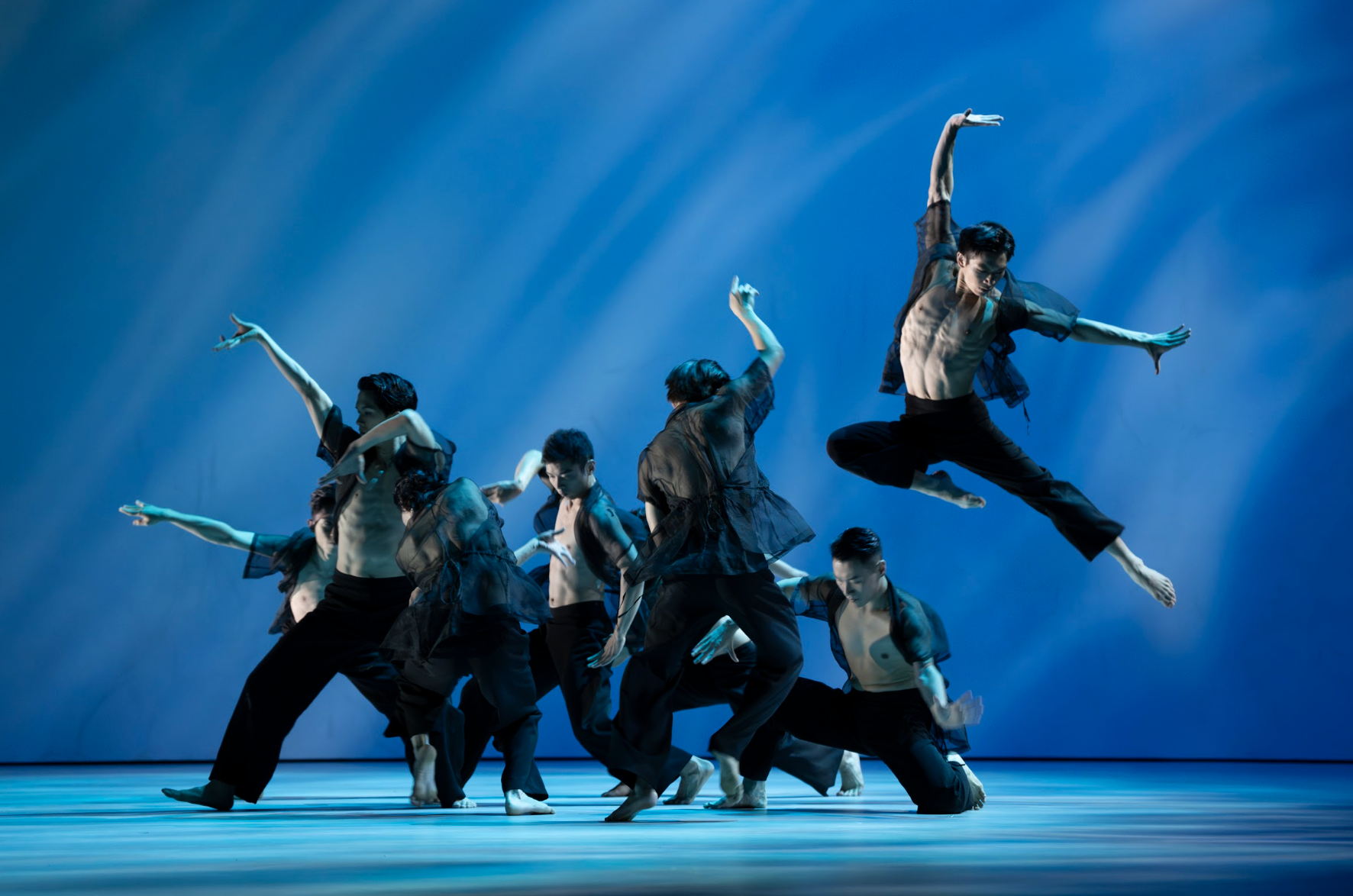
Dancers using martial arts-based movements to represent the twisting and weathered trees in Wu Guanzhong's painting in the second scene, ‘Spirit of Trees.’
Photo courtesy of Hong Kong Dance Company
Photo by Henry Wong@S2 Production
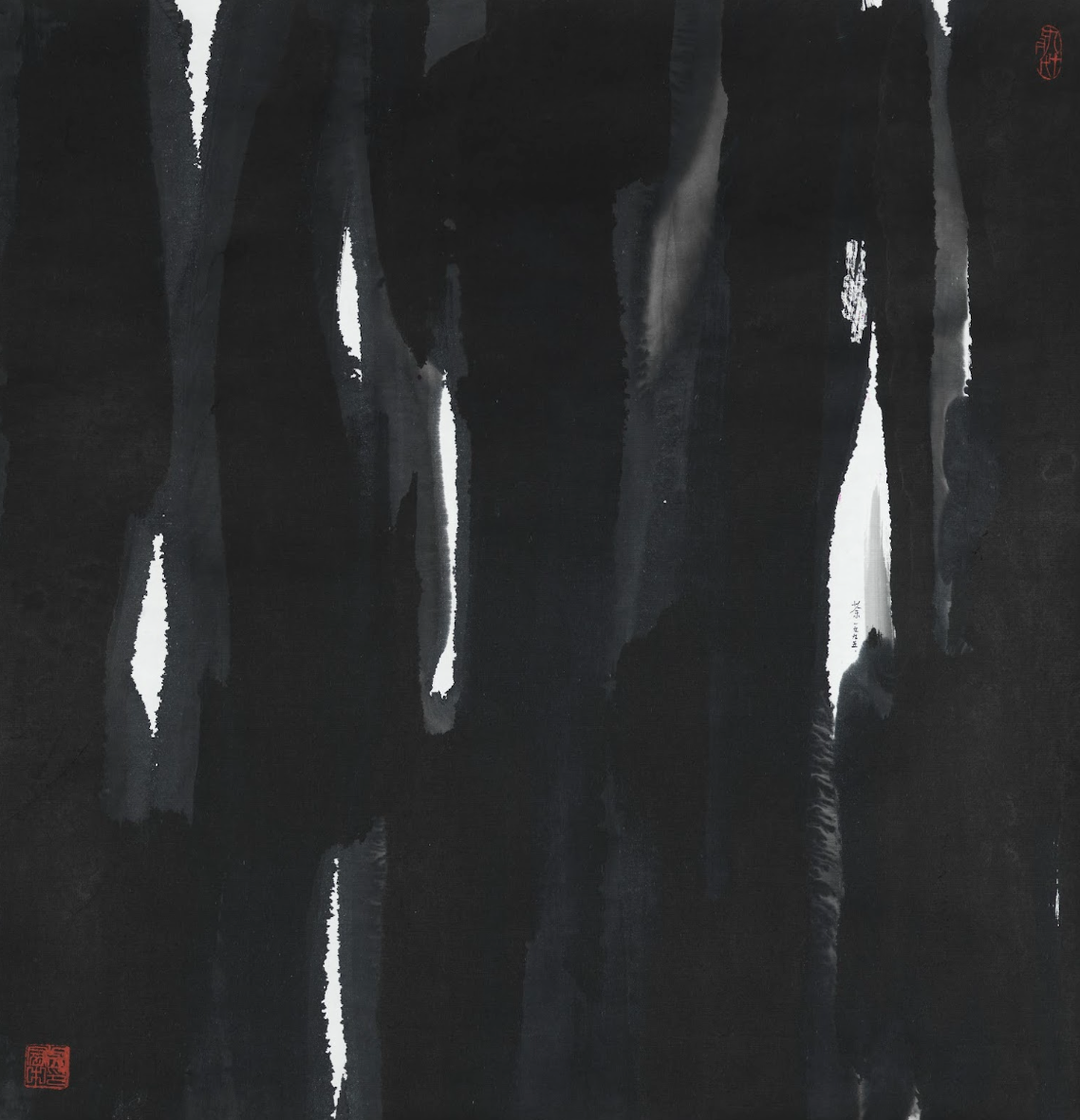
Steadying One’s Spirit in a Sea of Ink
By Wu Guanzhong (1919–2010); 1995
Ink on paper; 68.4 x 66.2 cm
Collection of Hong Kong Museum of Art
Donated by Mr Wu Guanzhong and his family (FA2018.0103)
This boundless movement embodies Wu Guanzhong’s advocacy for the modernisation of ink painting. He declared that ‘brush-and-ink equals zero,’ arguing that it was meaningless to fixate strictly on traditional brushstrokes, as conventional literati did, while ignoring the emotional weight of the overall composition. Predictably, his groundbreaking philosophy was fiercely rejected by the mainstream art world of his time. This solitary performance represents the lonely path Wu Guanzhong walked in defense of his artistic vision.
Wu Guanzhong painted withered lotuses as a testament to his harrowing experience during the Cultural Revolution. The inspiration came on a bitter winter day. Branded a ‘counter-revolutionary’ artist and forbidden from painting, Wu walked from his courtyard house to Beihai Park in Beijing. There, he saw withered lotus stalks and leaves jutting high and low above the frozen water. Overwhelmed with sorrow, Wu saw in in them the bitterness of life hidden within the lotus carcasses. This scene stirred him want to paint, yet the crushing political pressures denied him a brush. It was only decades later that he finally brought to life the vision he had carried in his heart for 30 years. Returning to that memory, he used the fluid grace of ink to express a sense of tragic heroism, showing a firm resolve to break rather than yield. This series of paintings is, in essence, the story of his life.
On stage, this subject matter is physically realised through an installation of bare branches hanging from above. Instead of projecting matching lotuses onto the backdrop, visual designer Sophie Laly chooses to project footage of swaying reeds captured near her hometown in France. Wu Guanzhong once wrote that reeds and lotus share no essential difference, as both enter the realm of Zen through purity. In doing so, Laly steps into Wu's perspective, seeking a subject in her own landscape that inspires her just as the lotus inspired him. She also reflects upon Wu’s years in France, envisioning the natural scenery that might have caught his eye.
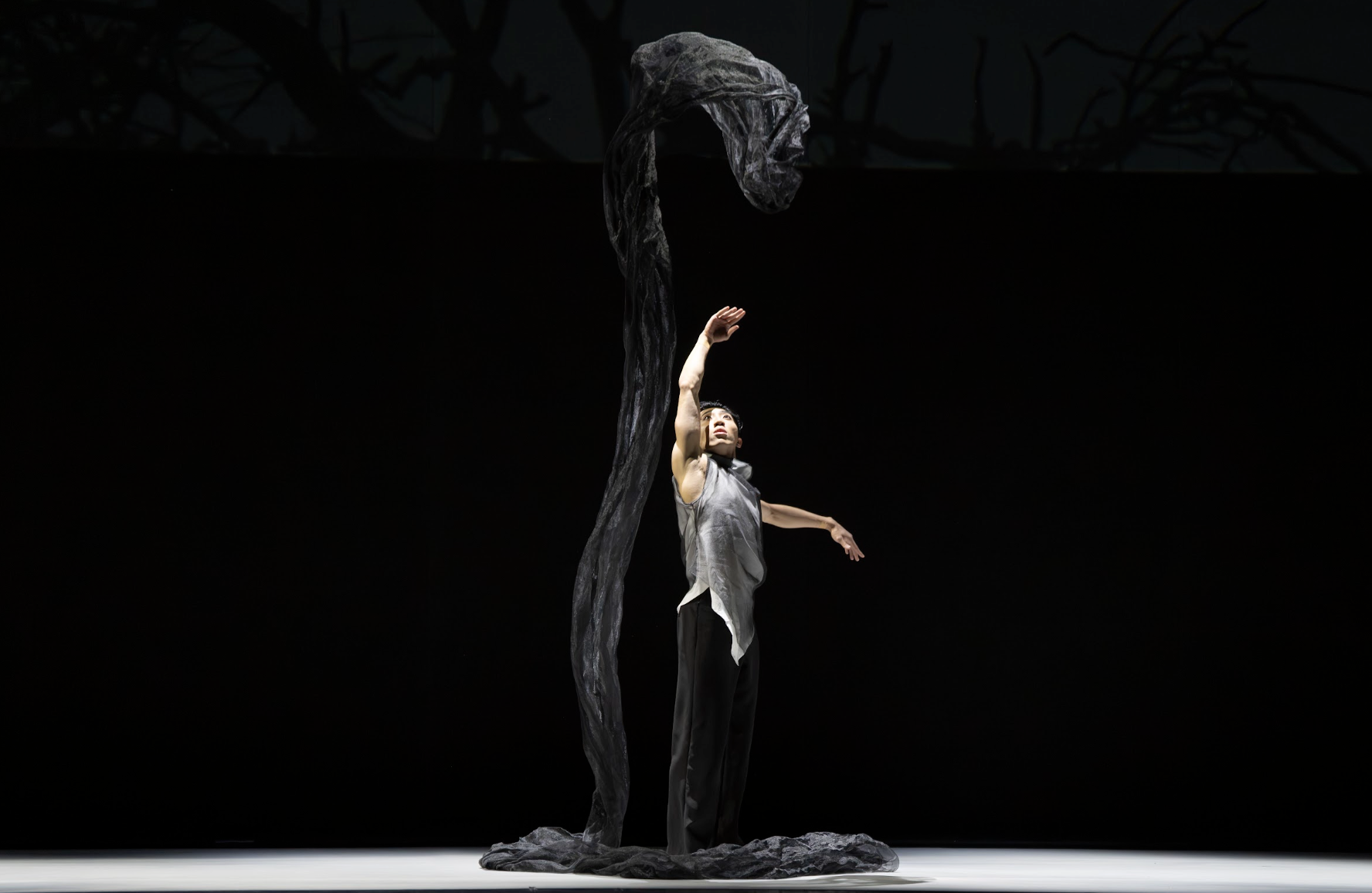
Dancer Lam Wan-ho in the third scene, ‘Pulse of Ink.’
Photo courtesy of Hong Kong Dance Company
Photo by Henry Wong@S2 Production
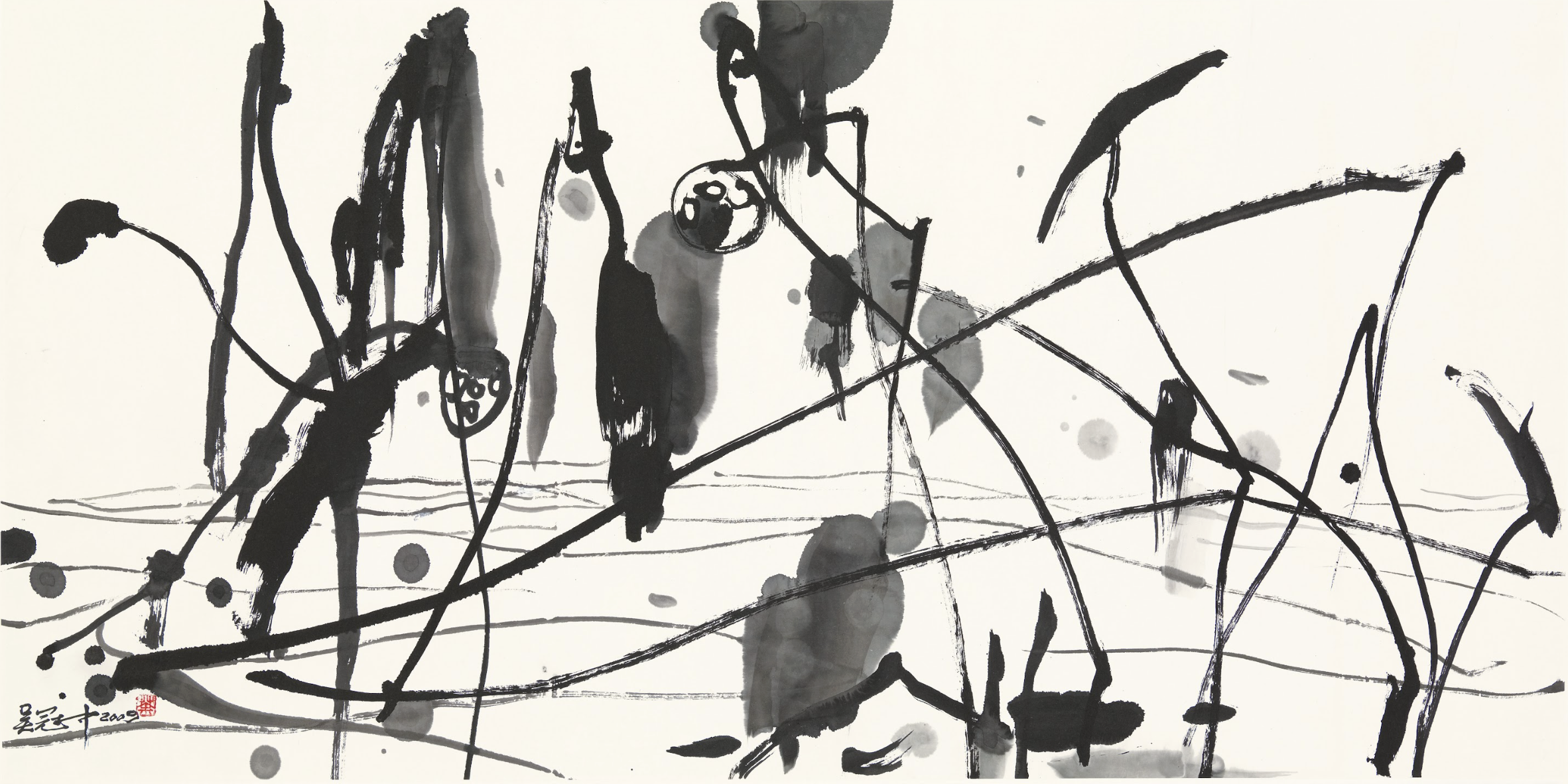
Leaving Youth Behind
By Wu Guanzhong (1919–2010); 2009
Ink on paper; 69 x 138 cm
Collection of Hong Kong Museum of Art
Donated by Mr Wu Guanzhong and his family (FA2009.0094)
Beneath the branches, the dancers become the withered lotuses, moving in varying forms high and low. Their arms bend and twist like the broken stalks, capturing a sense of resilience and a spirit that resists submission. As the scene nears its conclusion, lighting designer Dominique Drillot casts the shadows of the hanging branches against this backdrop. These layered shadows emulate the stark, expressive strokes of Wu Guanzhong's lotus paintings. Through this integration of French reeds with the silhouette of Wu's withered lotuses, the production demonstrates that the formalist beauty of his art transcends borders.
Wu Guanzhong created many works portraying vines meandering and interweaving across whitewashed walls, capturing the intrinsic rhythmic lines of nature. Despite a difficult artistic journey, his pure, observant eyes found romance in the natural world. To him, the weaving vines and a nearby tree were like lovers from different worlds, destined never to cross paths. He imagined himself as a matchmaker, capturing a fleeting moment where the sunlight casts the shadow of the tree onto the wall, ringing solid vine and void shade together. Reflecting on his painting Matchmaking on a Wall, he wrote: ‘It occurs to me that vines on the wall are lonely too. I therefore purposefully introduce the shadow of a tree onto the wall, so that the solid line of the vine will meet the void of the tree's shadow.’ He romantically wondered, ‘Will love grow from such an encounter, or a momentary embrace?’
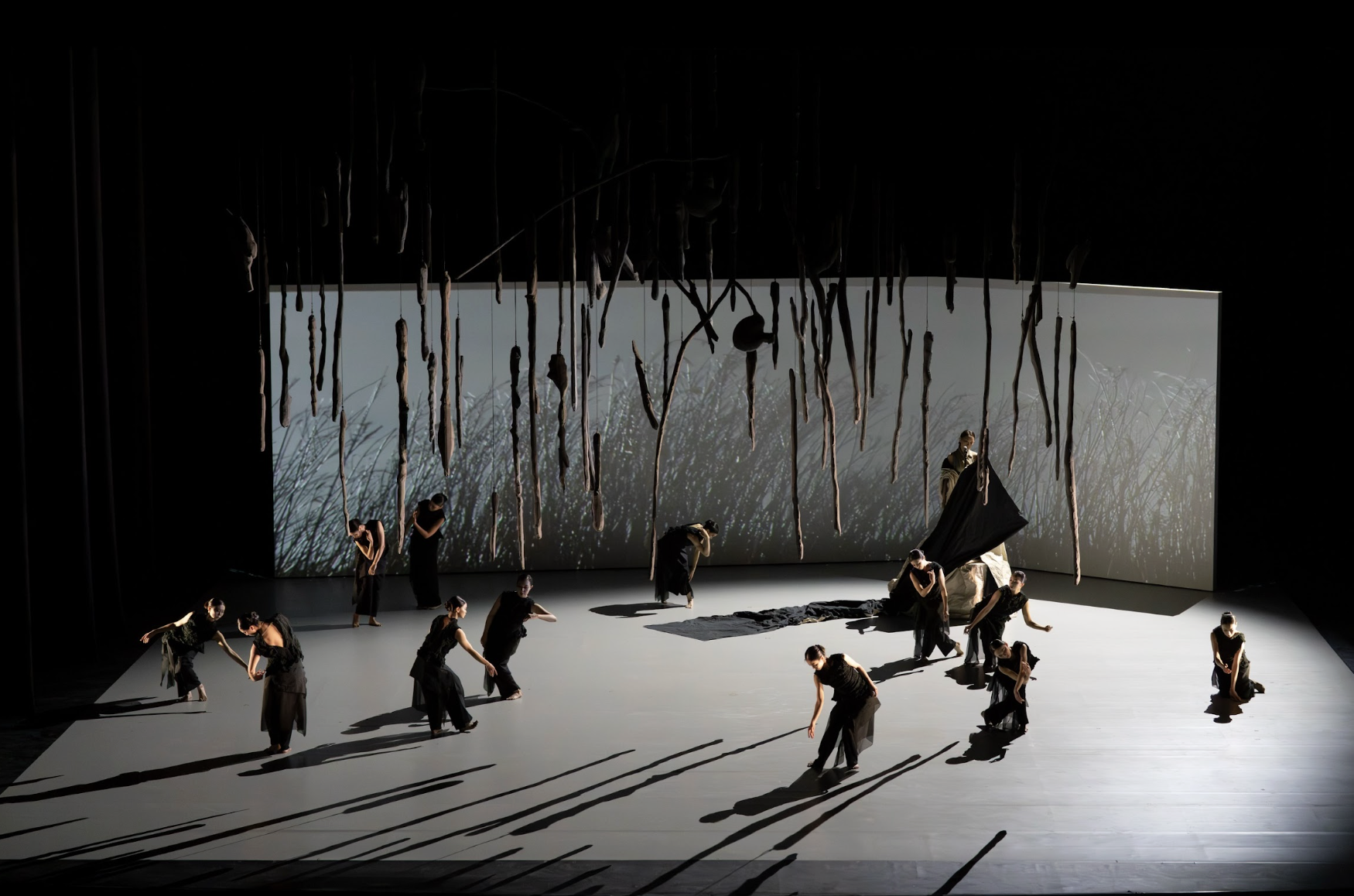
Installation of bare branches in the fourth scene, ‘Lotus Shadows.’
Photo courtesy of Hong Kong Dance Company
Photo by Henry Wong@S2 Production
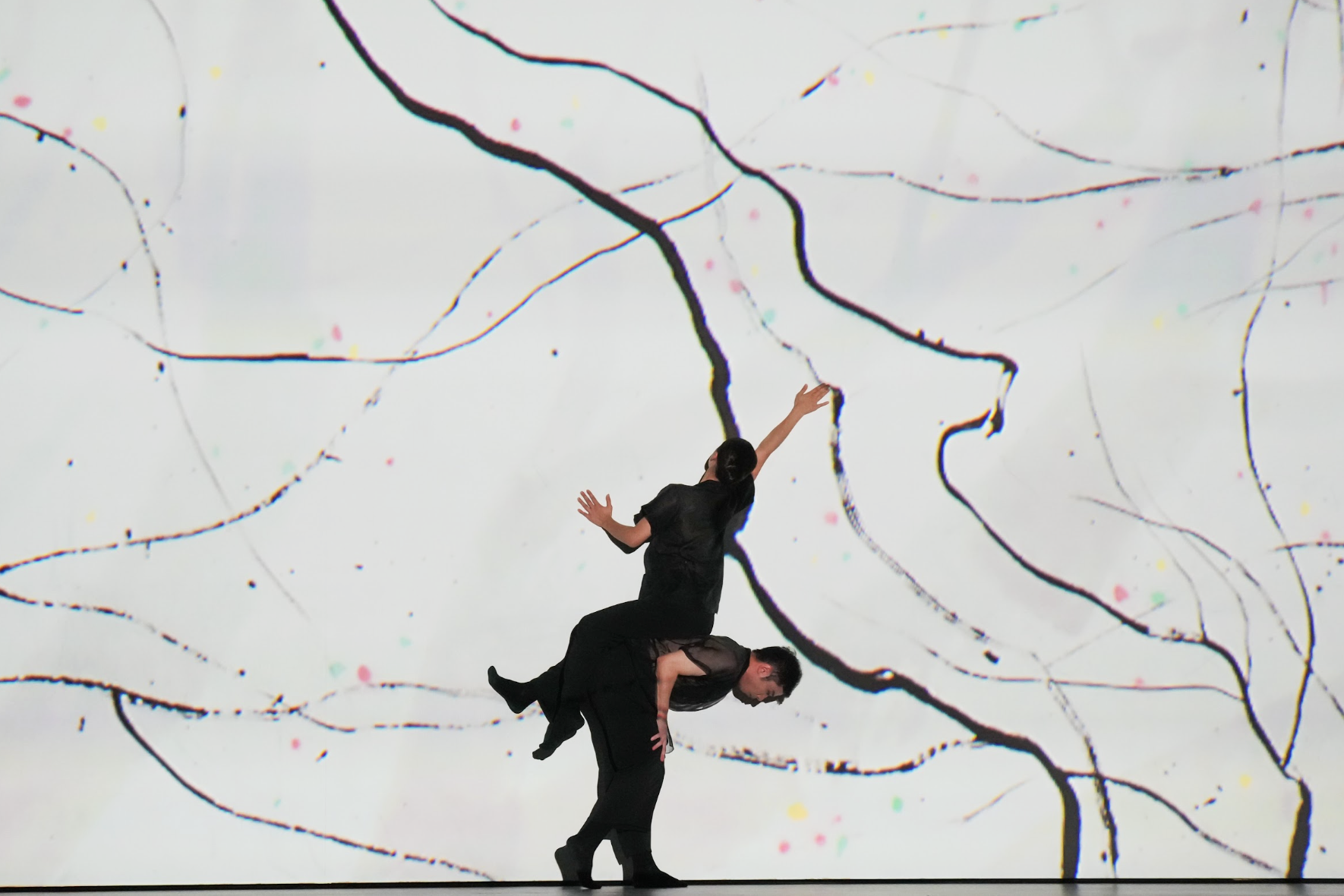
Dancers climbing upon one another in the fifth scene, ‘Entwined Vines.’
Photo courtesy of Hong Kong Dance Company
Photo by Henry Wong@S2 Production
This romantic sentiment is translated enchantingly onto the stage. Dancers move in pairs against a stark white backdrop, climbing upon and intertwining to emulate the twisting vines. As Wu's painting is subtly projected onto the wall, a solitary dancer weaves gracefully between them like the elusive shadow of the tree. The scene culminates with one dancer hoisting their partner aloft, allowing them to ‘walk’ across the surface of the wall as if tracing the fluid grace of an ink brush gliding across a blank sheet of paper.
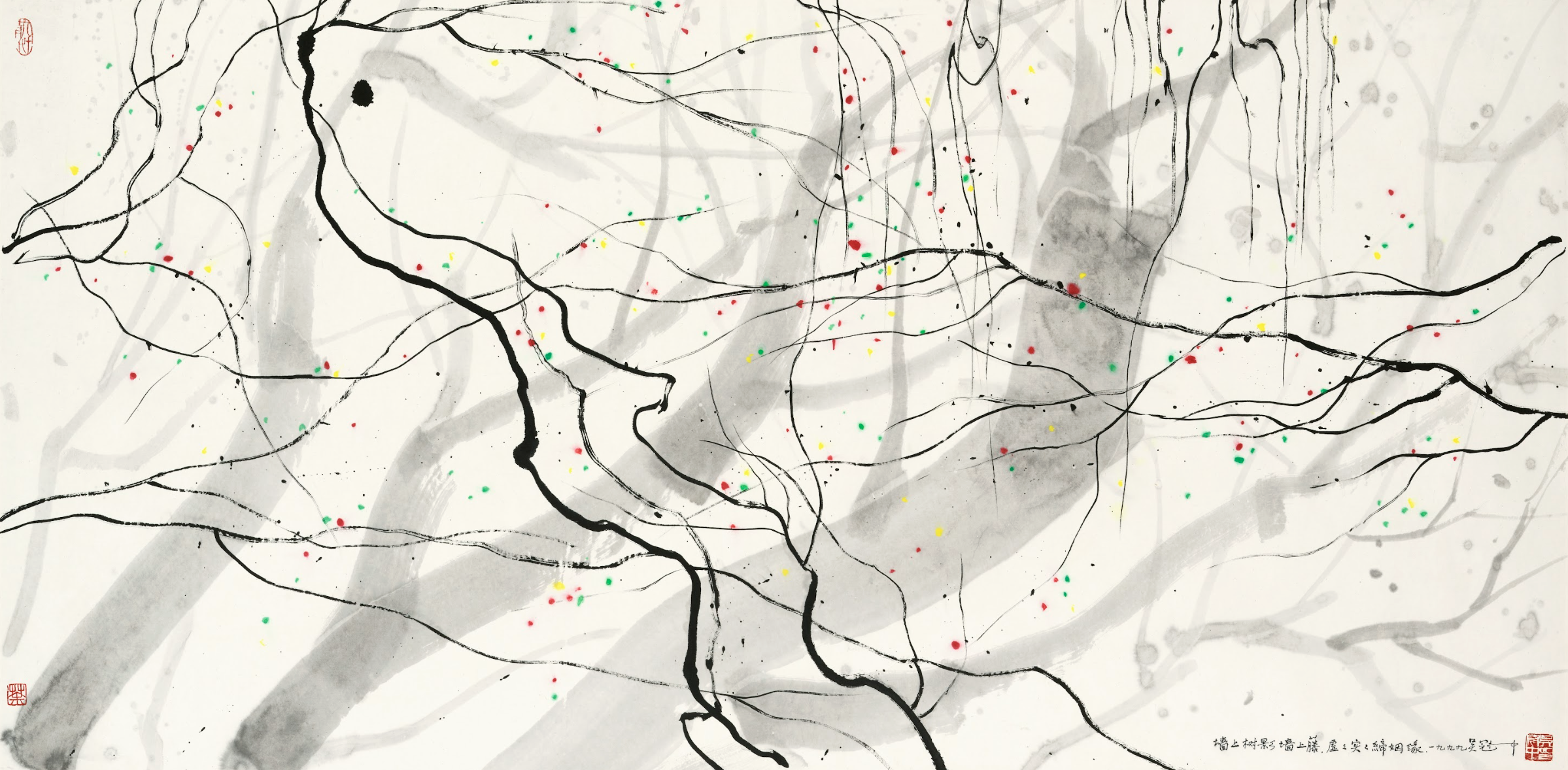
Matchmaking on a Wall
By Wu Guanzhong (1919–2010); 1999
Ink and colour on paper; 68.1 x 137.6 cm
Collection of Hong Kong Museum of Art
Donated by Mr Wu Guanzhong and his family (FA2018.0115)
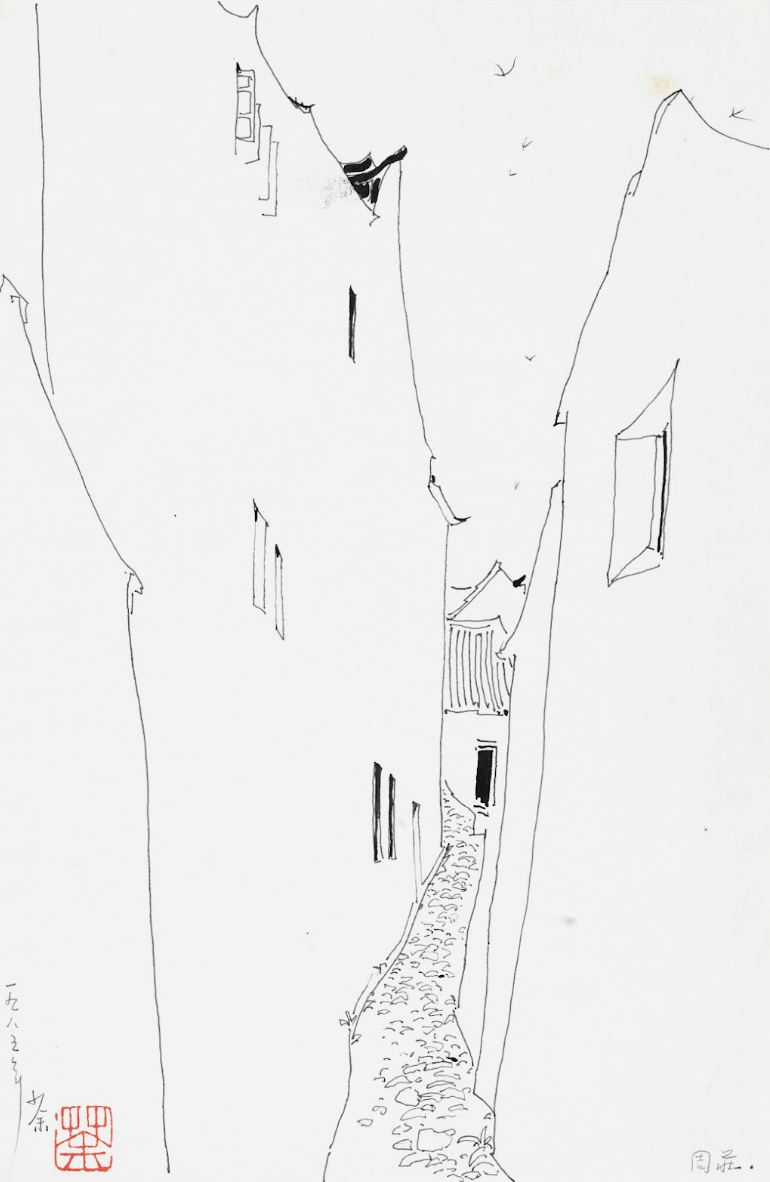
A Narrow Alley (I)
By Wu Guanzhong (1919–2010); 1985
Ink on paper; 33.7 x 22.1 cm
Collection of Hong Kong Museum of Art
Donated by Mr Wu Guanzhong and his family (FA2018.0265)
When Wu Guanzhong studied in Paris, he often frequented Montmartre, which he called the ‘Mecca of all artists in the world.’ Observing the destitute painters on the streets, the young artist couldn’t help but wonder what his own future would hold. Wandering the alleyways of Montmartre with stark white walls and shut windows, he discovered a melancholy born from the impermanence of youth, alongside a poetic longing that drew his heart back home. Decades later, Wu’s iconic depictions of the narrow alleys of Jiangnan would draw deep inspiration from the grey, solitary streetscapes of Paris.
This segment brings the audience into Wu’s Parisian memories. Sun Yu’s evocative viola creates the soundscape of a quiet Paris morning, while dancer Ong Tze Shen’s choreography embodies the solitary figure of the young artist pacing the streets during his years abroad. The solo highlights Wu’s early hardships and the emotional weight he endured alone in the singular pursuit of art.
Yet, the heavy solitude breaks. Evoking Wu's journey from the quiet of artistic isolation out onto a worldly stage, the solo concludes as the stage opens up to a vibrant cascade of colour dots, introducing the final scene, Our City.
Drawing inspiration from Wu Guanzhong's painting City Night, the seventh scene captures the restless energy and constant movement of a metropolis that never sleeps, offering a reflection on contemporary urban life.
In the 1980s, following a period of historical challenges, the reform and opening-up policy allowed opportunities for art exchange and overseas exhibitions to arise again. Travelling between urban areas and rural landscapes, including Parisian streets, West African historical towns, Southeast Asian fishing villages, and Nordic snow canyons, he accumulated diverse inspiration for his art.
Among these places, Wu held a unique emotional connection to Hong Kong, a place that witnessed his hurried comings and goings. In the 1950s, he stopped over in Hong Kong while returning to China after his study in France. 30 years passed before he visited the city again. The city served as a gathering place for him and his former mentors and peers, as well as a bridge connecting his art to the world. Wu Guanzhong cherished Hong Kong, where the convergence of East and West resonated with his lifelong artistic pursuits.
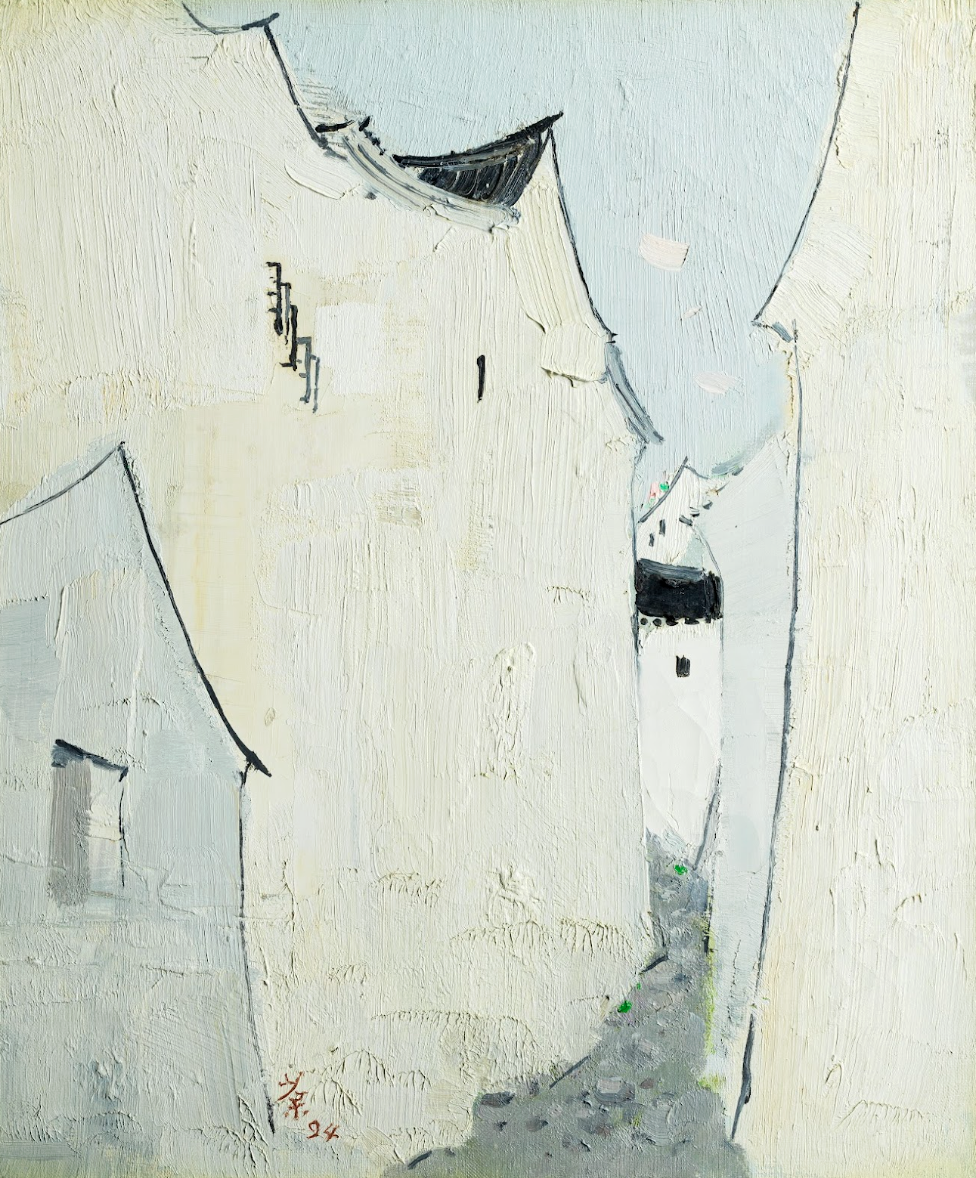
A Narrow Alley
By Wu Guanzhong (1919–2010); 1994
Oil on canvas; 46 x 39 cm
Collection of Hong Kong Museum of Art
Donated by Mr Wu Guanzhong and his family (FA2018.0047)
The choreography traces the passage from night to dawn. Through a lively, modern dance, the performers celebrate the nightlife, changing their inner costume to a colourful one, revealing bright colours amidst the black. As the nightlife fades, a subtle birdcall woven into the music, a familiar morning soundtrack to anyone living in Hong Kong, signals the start of a new day. The dancers cluster together to mime morning rituals of urban life: washing faces, brushing teeth, getting dressed and enduring the crowded subway. This playful shift from the abstract to the everyday offers a lighthearted warmth, instantly bringing a smile to the audience's faces.
Serving as a summary of the performance, a dancer waves a massive flag like a grand splash of ink, filling the stage with a triumphant and heroic feeling. Meanwhile, another dancer moves continuously around and beneath the flag. Then the epilogue draws together the most memorable elements from earlier scenes. Echoing the prologue, this final chapter looks backward over a lifetime of art as a fitting culmination that embodies the spirit of Wu Guanzhong's Ink Odyssey.
The dancer Ong Tze Shen breathes life into a red balloon before releasing it into the air. Then, the performance reaches its zenith with a dramatic rain of coloured balls descending upon the stage, resembling the dots in Wu’s paintings, such as Faces Unchanged. From its creation in 2001 until it was donated to the Hong Kong Museum of Art in 2010, this work hung in Wu’s living room, showing his special affection for it. Reflecting on it, he wrote: ‘The exiled emperor Li Yu sadly missed the opulent palace he had lost, mourning that “only the faces have changed.” The flowing stream cannot stop the fallen blossoms from drifting away, and the blossoms cannot keep their vibrant freshness. I splash bright colours only to emphasise that the faces have not changed—or will not change... wishfully.’ In his painting, Wu eliminated all lines, leaving behind only patches and dots of vivid colour. Looking at such an abstract composition, some might think that the string of his famous ‘kite with an unbroken string’ had finally snapped.
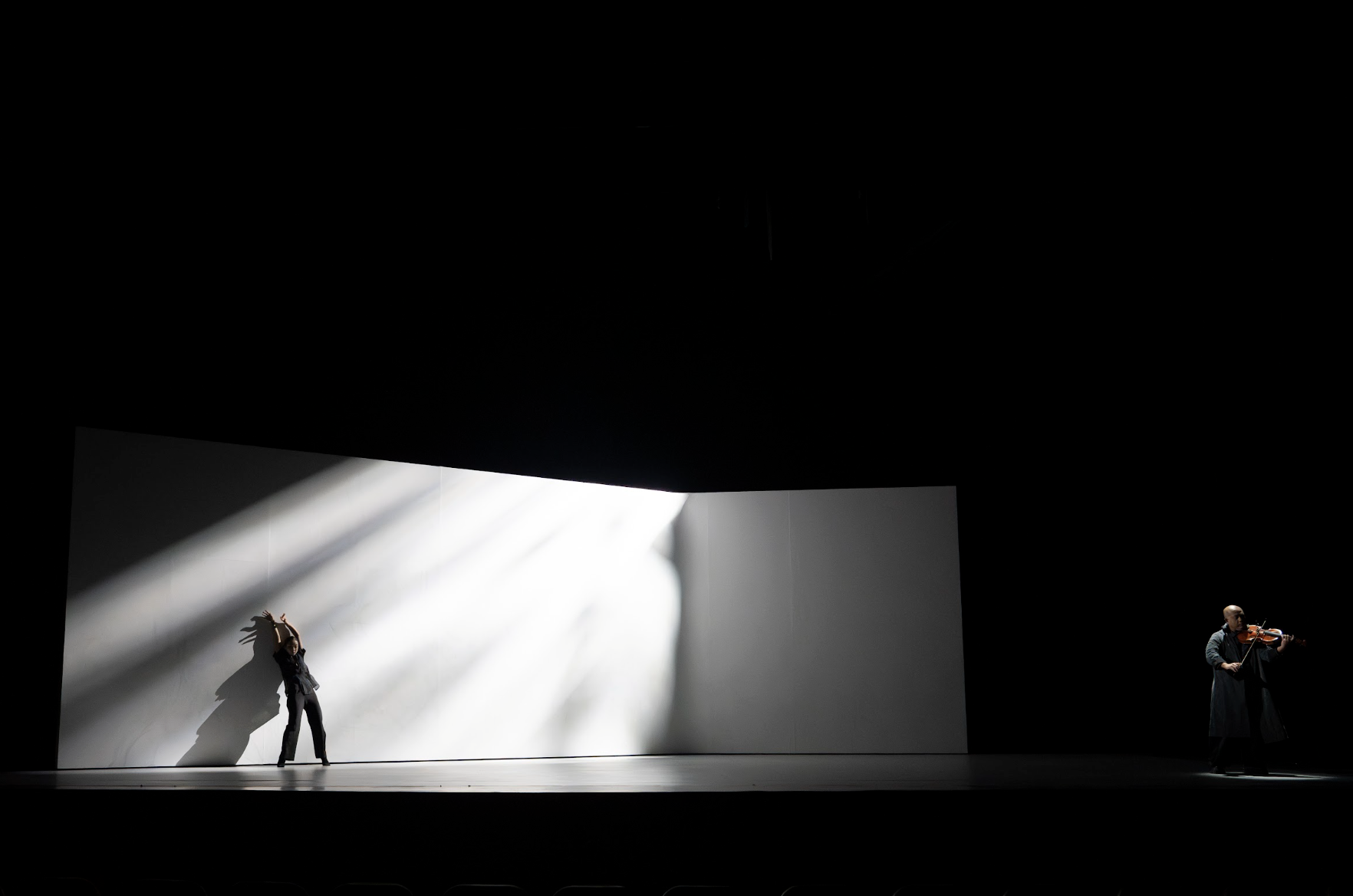
Solitary figure of dancer Ong Tze Shen in the sixth scene, ‘Silent Alley.’
Photo courtesy of Hong Kong Dance Company
Photo by Henry Wong@S2 Production
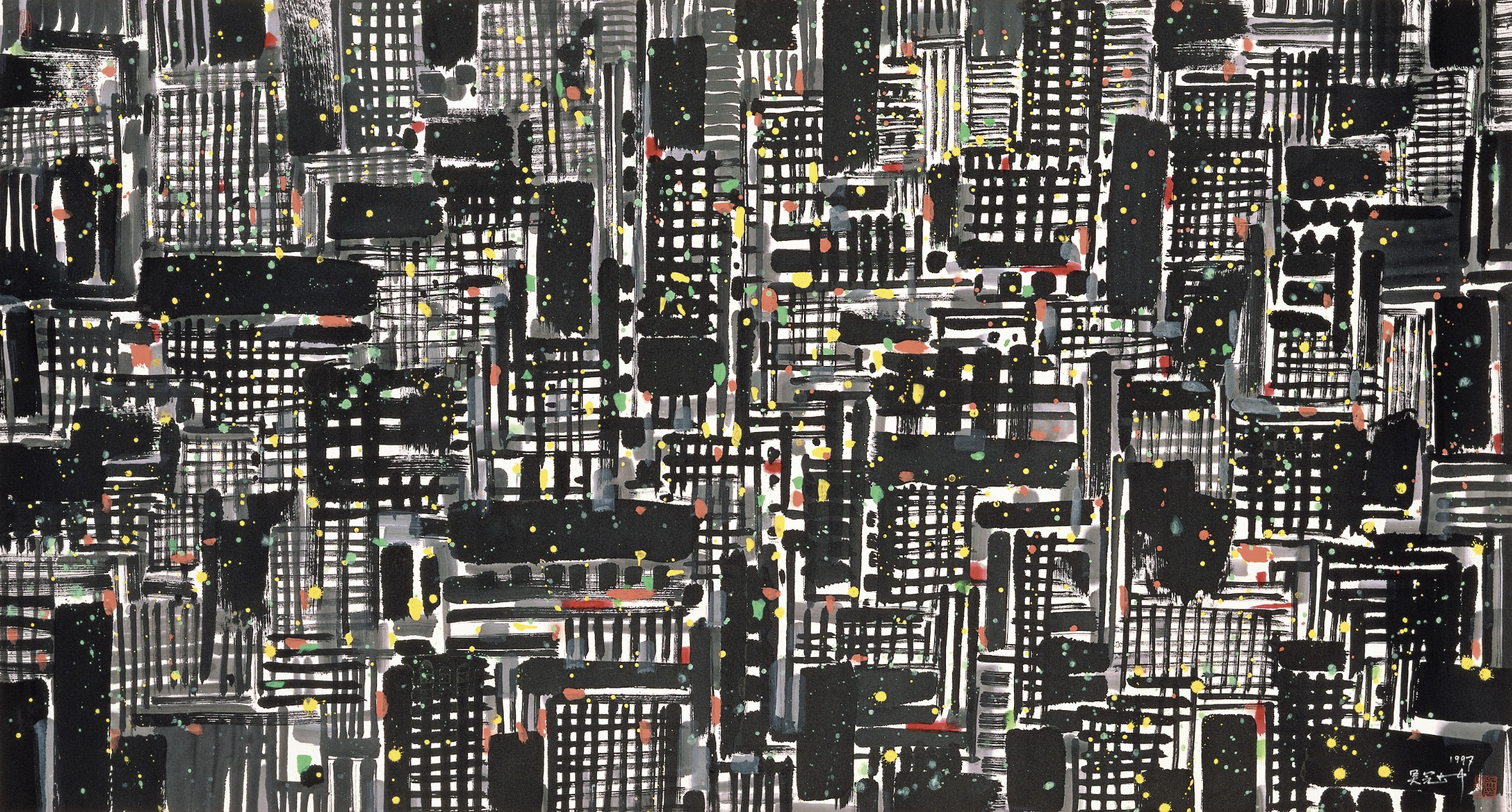
City Night
By Wu Guanzhong (1919–2010); 1997
Ink and colour on paper; 96.3 x 179.8 cm
Collection of Hong Kong Museum of Art
Donated by Mr Wu Guanzhong and his family (FA2002.0008)
Wu, however, saw it differently: ‘Even though the tangible lines are broken, I still hold the remote control in my hands.’ That unbroken string was his emotion. He was always against pure abstraction for its own sake; his paintings always held hidden meanings, and spoke from the heart. No matter how much his style evolved, the core emotion remained steadfast: the faces unchanged. This final burst of vibrancy serves as a powerful tribute to Wu’s resilience, reminding the audience that even through the darkest hardships, he sought out and ultimately found radiant colour. No matter where his difficult path led, he stayed true to his original aspiration. Ultimately, he won the deep recognition he deserved from both his audience and the art world.
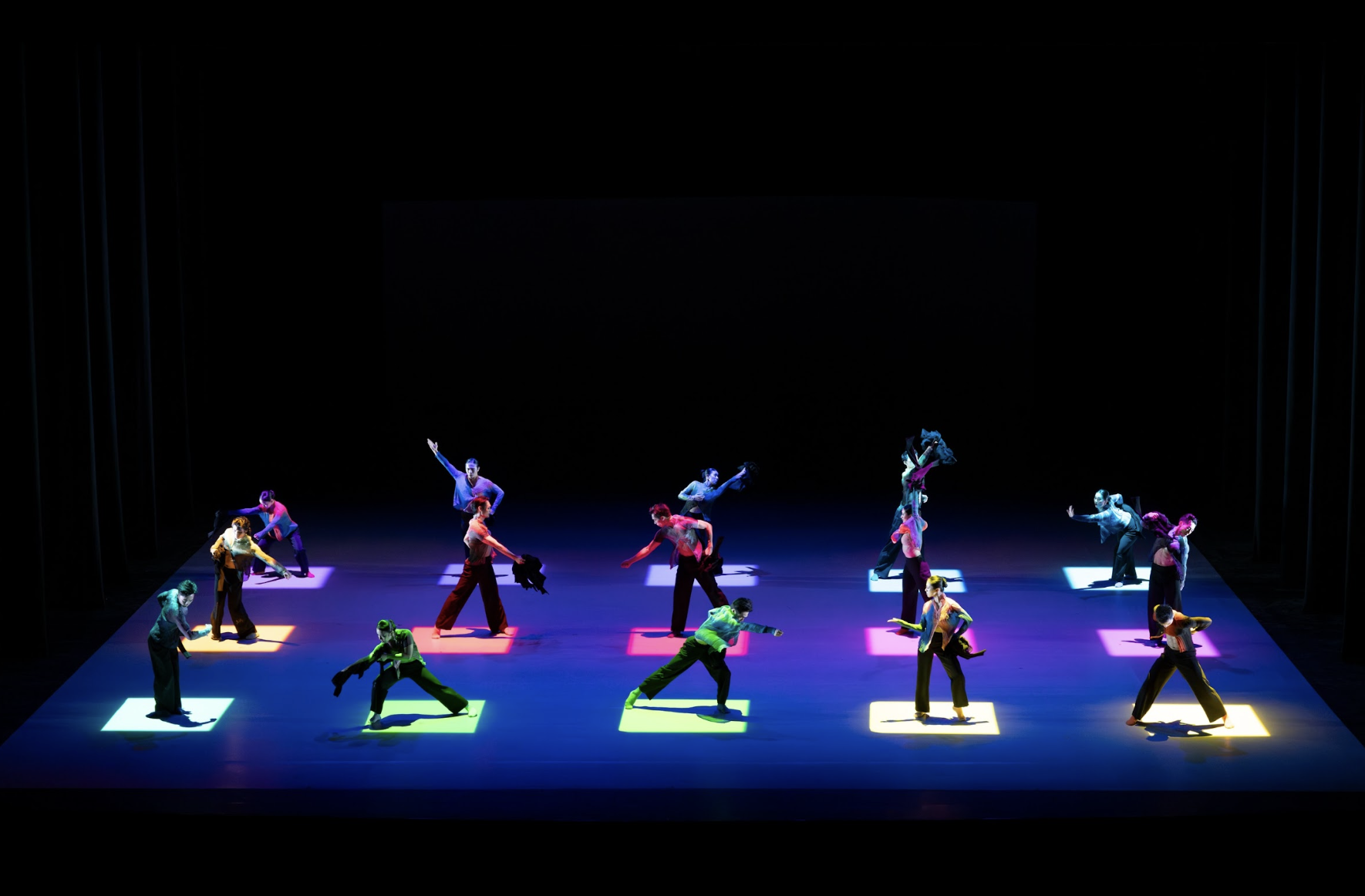
The seventh scene, ‘Our City.’
Photo courtesy of Hong Kong Dance Company
Photo by Henry Wong@S2 Production
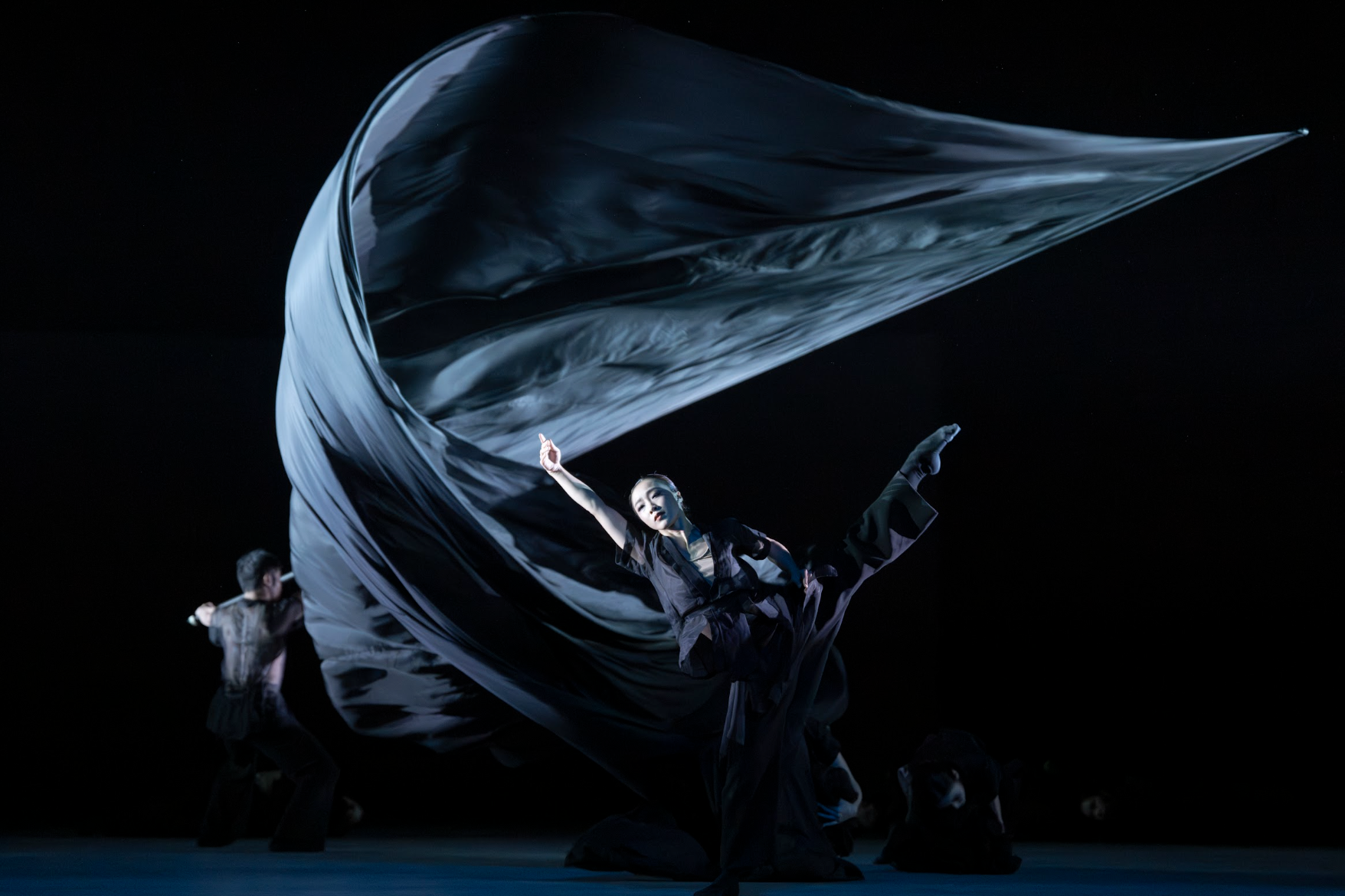
A dancer waving a massive flag while another dancer moving continuously around and beneath the flag in the Epilogue.
Photo courtesy of Hong Kong Dance Company
Photo by Henry Wong@S2 Production
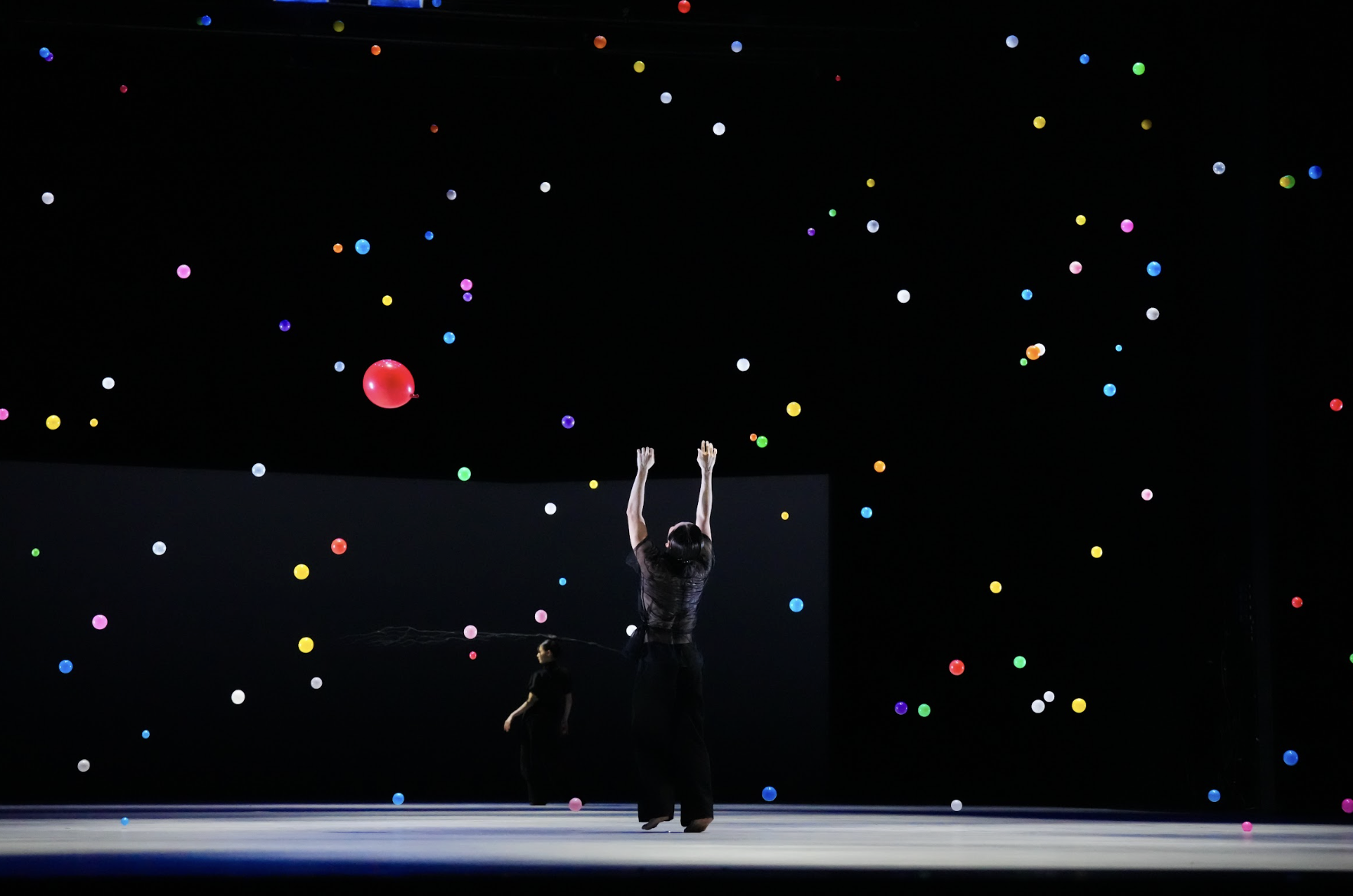
Dramatic rain of coloured balls descending upon the stage.
Photo courtesy of Hong Kong Dance Company
Photo by Mak Cheong-wai
If the 2014 production of Two Swallows faithfully rendered Wu Guanzhong’s painted world, this performance is a complete sublimation. The creative team deeply absorbed Wu’s tumultuous life journey, distilling their reverence into a cohesive piece on stage.
Rather than imitating Wu’s paintings, Yang Yuntao’s abstract approach to choreography leaves a deliberate space for the audience to immerse themselves in Wu’s odyssey and interpret it freely. This production invites audiences to experience the master's spirit beyond gallery walls. Grounded in cross-disciplinary dialogue, the museum entrusted the team to let the art breathe, echoing the master's own rebellious legacy. Wu Guanzhong stated that he never wished for successors to merely imitate his brushstrokes, and this fearless experiment resonates with the spirit that defined his pioneering synthesis of East and West.
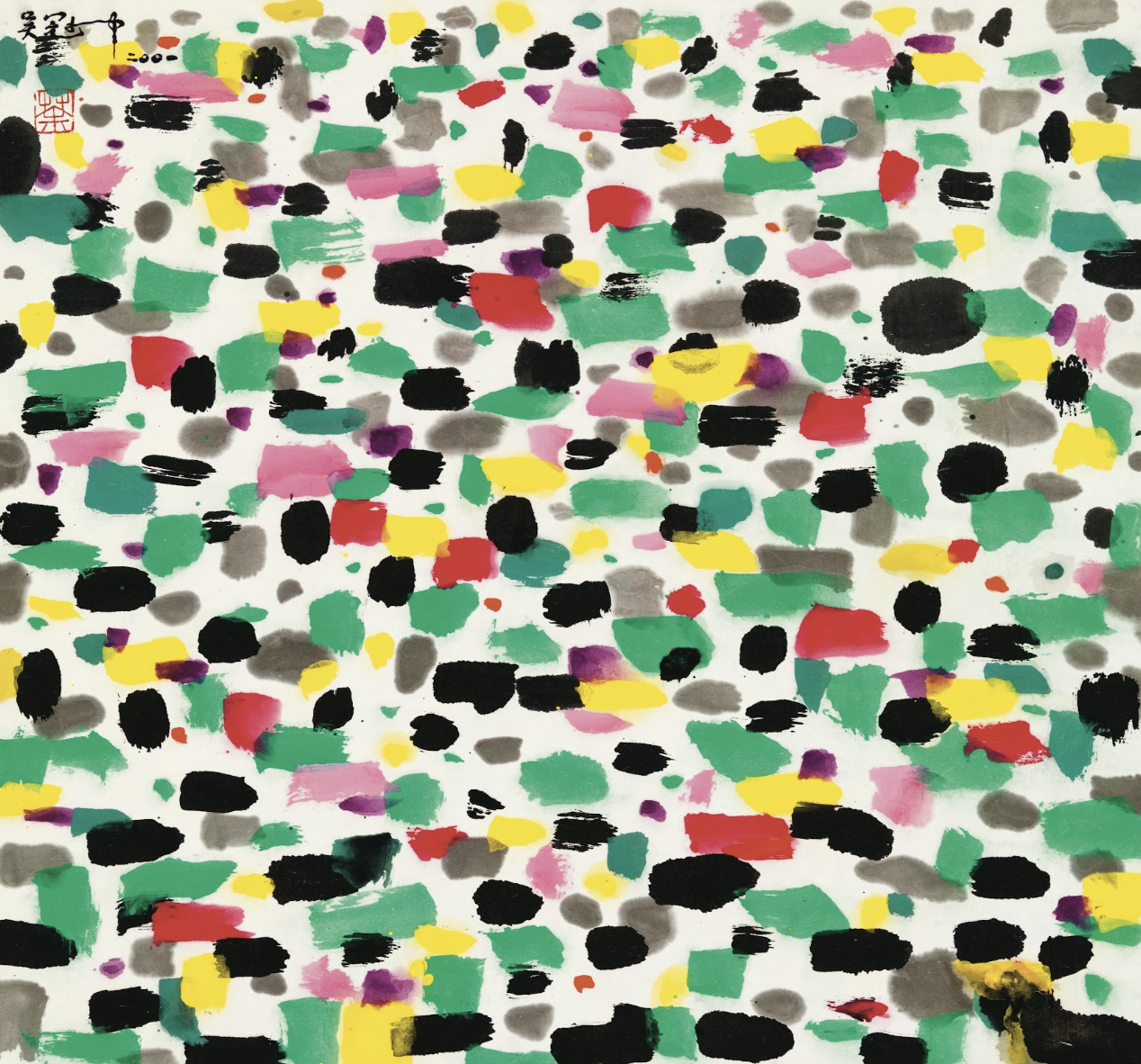
Faces Unchanged
By Wu Guanzhong (1919–2010); 2001
Ink and colour on paper; 45 x 48.2 cm
Collection of Hong Kong Museum of Art
Donated by Mr Wu Guanzhong and his family (FA2010.0001)
The collaboration with Hong Kong Dance Company proved meaningful. As the final scene’s vibrant palette cascaded like a rainfall of colours, the theatre filled with wonder, offering a powerful reminder that the spirit of Wu Guanzhong’s art remains timeless and immortal. Most importantly, this performance introduced his work to a broader, more diverse audience, capturing their hearts in a profound and subtle way. The string to the kite remains unbroken, and a unique Wu Guanzhong lives on in every heart.
Nadia Sheung-ying Lau is Curator (Chih Lo Lou) at the Hong Kong Museum of Art.