
Highlights

From Lion to ‘Idol’: An Early Reception of Chinese Sculpture in America
Quite possibly one of the earliest Chinese stone lions to reach the United States can be found in the permanent collection of Union College in Schenectady, New York (Fig. 1). It was gifted to the college in 1874 by John Marshall Willoughby Farnham (1829–1917), a Union alumnus and Presbyterian minister who dedicated his life to missionary and humanitarian work in China. Farnham acquired the lion sometime between 1860 and 1862, when it was unearthed during the construction of fortifications against the Taiping rebels in the vicinity of his school for boys, which was located near the south gate to the city of Shanghai. He installed the lion in front of his school for some years before sending it to Union College. Reified as a guardian figure by Farnham, the sculpture would be received in a most unconventional manner after crossing the globe.

‘Renaissance Venice: Life and Luxury at the Crossroads’ at Gardiner Museum, Toronto 14 October 2021–9 January 2022
After a year-long delay as a result of the ongoing global pandemic, the much-anticipated exhibition ‘Renaissance Venice: Life and Luxury at the Crossroads’ finally opened at the Gardiner Museum in Toronto. Founded in 1984 by the philanthropists George and Helen Gardiner, the Gardiner Museum is Canada’s only museum that specializes in ceramic art. The major pieces in the permanent collection range from ancient American sculpture, Italian majolica earthenware, European court porcelain, a well-published collection of Japanese export art, and Chinese Ming (1368–1644) and Qing (1644–1911) period porcelain.

An Interview with Robert and Lisa Kessler
Robert and Lisa Kessler are patrons of the Denver Art Museum. Although they collect across categories, they are perhaps most well-known for their collection of contemporary Japanese ceramics which they exhibited in, ‘From the Fire Contemporary Japanese Ceramics from the Robert and Lisa Kessler Collection’, from 25 September 2016 to 19 November 2017 at the Denver Art Museum. The exhibition featured 65 pieces created by 35 Japanese artists and included pieces made by both master ceramists, designated as Living National Treasures in Japan, as well as by emerging artists. At home, they have built a Japanese and Chinese scroll collection room along with a Japanese garden to house their collection. We speak to them about their collecting journey.

Discovering Chinese Art in Wroclaw—Insights from the Neisser and Nowicki Collections
In the 17th and 18th centuries, a fashion for Chinese and Japanese culture as well as for chinoiserie and japonaiserie appeared in European applied art. Remarkable collections of Chinese art that have yet to be studied in depth emerged in both German and Polish regions. This article will discuss two prominent collections of Chinese art in Wrocław (known as Breslau before 1945)—the Neissers and Nowicki collections. They are, respectively, representative collections of Chinese art in Central Europe at the turn of the 20th century and the second half of the 20th century.

Nordic Private Collections of Chinese Objects
The latest publication by Minna Törmä explores the development of four private collections of Chinese art by people from Nordic countries. Törmä’s research may be seen as a continuation of her interest in the Finnish-born Swede, Osvald Sirén (1879–1966), a preeminent historian of Chinese art in Europe. Sirén was one of the first academically trained art historians who visited China to conduct research on Chinese art history, in contrast to others who went on exploratory excursions or archaeological activities and extracted objects for museums or institutional studies.

For the Love of Broken Porcelain
In 1960, while planting a rose garden on the grounds of a 600-year-old palace in Delhi, members of the Horticulture Branch of the Archaeological Survey of India (ASI) dug up a large hoard of broken blue-and-white dishes and bowls. These ceramics were thought to be Mughal porcelains. While this was duly noted in a brief entry in the ASI’s journal, Indian Archaeology 1961–1962: A Review, the discovery was regarded at the time as unimportant. The porcelain was put into storage, and the exact location of its discovery was forgotten. However, the collection was and remains the world’s largest collection of Yuan dynasty (1260–1368) blue-and-white porcelain.

Textiles in Burman Culture
Sylvia Fraser-Lu is a respected author in the world of Southeast Asian textiles. Her painstaking research and attention to detail ensure this book will be an important source for students and textile enthusiasts. A comprehensive text is accompanied by relevant colour and black-and-white plates. The author carries the reader through the history of textiles from early settlements to the workshops of today. Chapters on techniques and production highlight areas of the country where beautiful fabrics continue to be produced.

Buddhist Art Initiative: Connectivity as a Driver for Change
The creation of Buddhist sculptures, paintings, and ritual implements, and the use of a wide range of symbolic representations in Buddhist visual culture, served originally to support religious practice and lead believers to the Buddha’s teachings. Whether as a devotional object, a donation for merit making, a visualization tool used in ritual, or a vehicle for the path of meditation, Buddhist art fulfills its spiritual purpose all the more when it evokes transcendence of all form, the illusory realm of phenomena, and when it assists believers in attaining deeper levels of realization.
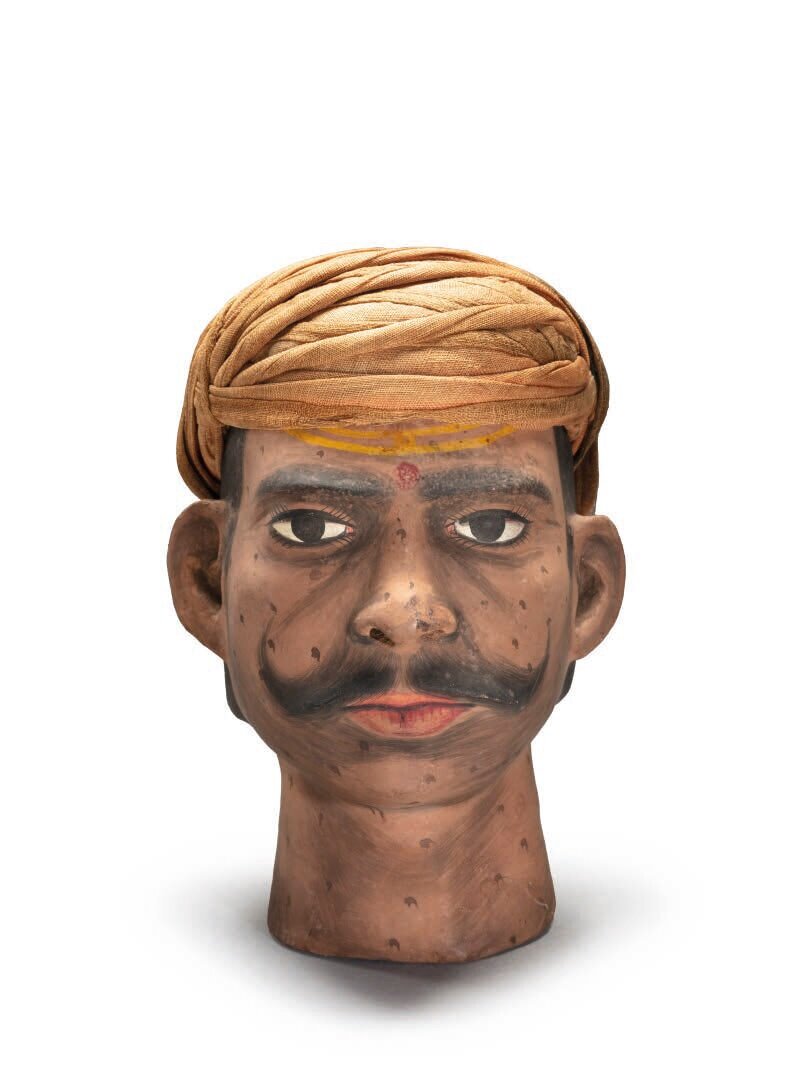
Perspectives of/from India in Salem: The Peabody Essex Museum’s Indian Art Galleries
When one thinks of India … Salem, Massachusetts is not likely the first thing to come to mind. And yet, the port city served as a vital node in the transoceanic trade networks of the 18th and 19th centuries, connecting the newly independent United States of America to important trading centres in India, China, Japan, Zanzibar, and other regions across the globe. Today, the collection of the Peabody Essex Museum (PEM) serves as a visual testament to the city’s legacy of global connectivity.

Henri Bertin and the Representation of China in Eighteenth-Century France
John Finlay’s long-anticipated book highlights a sizeable number of understudied Chinese objects in the collection of the Bibliothèque Nationale de France. They are part of the legacy of Henri Léonard Jean Baptiste Bertin (1720–92), a French statesman who maintained an extensive, decadeslong correspondence with the Jesuit missionaries in Beijing. Known as the cabinet de curiosités chinoises, Bertin’s collection comprised several hundreds of paintings, books, and artefacts of various kinds that he received from Beijing.