
Meg Maggio
Seoul, South Korea proved an apt location for the largest survey exhibition in Asia of Sol LeWitt, (b. Hartford, Conn. 1928–2007). Titled ‘Open Structures’, it opened at the Amorepacific Museum of Art, Seoul on 1 September 2026 and will run through 28 February 2027. The opening ceremony which included speeches by curators from Seoul and Tokyo as well as a brief introduction by LeWitt’s widow Carol, enjoyed packed-house attendance by Seoul’s art crowd and overseas guests. LeWitt, the American ‘father’ of conceptual and minimalist art, believed the artist’s idea(s) - rather than the object created - was the most important. He famously defied traditional art tenets by focusing on the artist’s head rather than his/her hand.
‘The idea becomes the machine that makes the art.’
Sol LeWitt, 1966
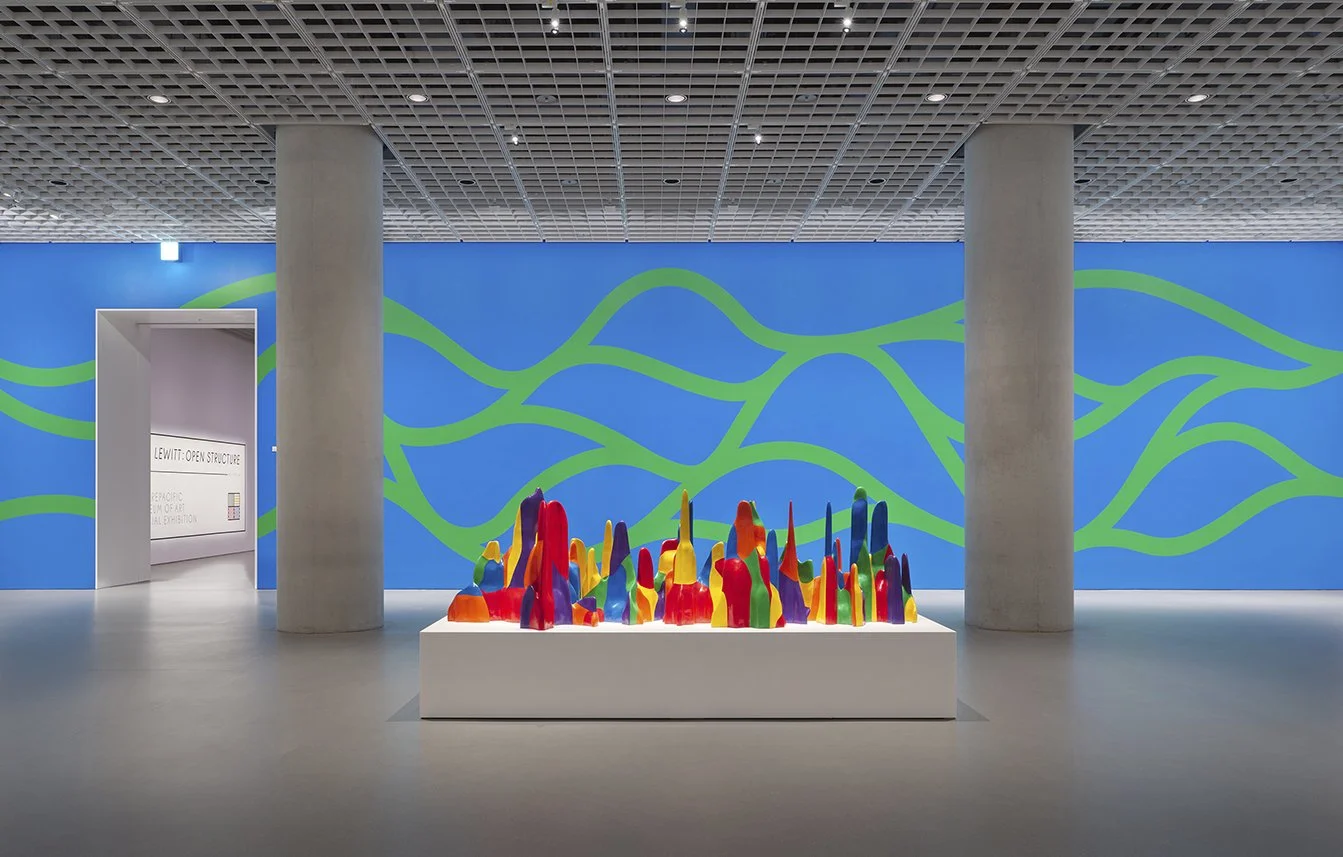
Courtesy of the LeWitt Estate and Amorepacific Museum of Art, Photo: Kyoungtae Kim
‘Open Structures’, first shown at Tokyo’s (MOT) Museum of Contemporary Art in a smaller scale iteration, and now expanded to 40 percent more works in the vast David Chipperfield-designed Amorepacific Museum in Seoul’s city center, comprises 45 works in total, including 13 wall drawings, structures (rather than ‘sculptures’ per se), paintings, photographs, prints, and archival materials. The highlight is the 13 massive floor-to-ceiling wall drawings realized in Seoul in ‘conversation’ with the specific architecture of the exhibition space. It was produced in accordance with LeWitt’s written instructions and rendered in collaboration with local art students. Opened to coincide with the third edition of Frieze Seoul and Korea’s own KIAF fair, the decidedly non-commercial museum exhibition provided welcome ‘relief’ from the art trade all around.
LeWitt’s output is well represented in the exhibition – starting with his early white skeletal structures and straight-line black and white geometric forms and later shifting to colourful curves of various configurations and mediums. Rarely exhibited archival material including a large selection of black and white photographs are also on display.
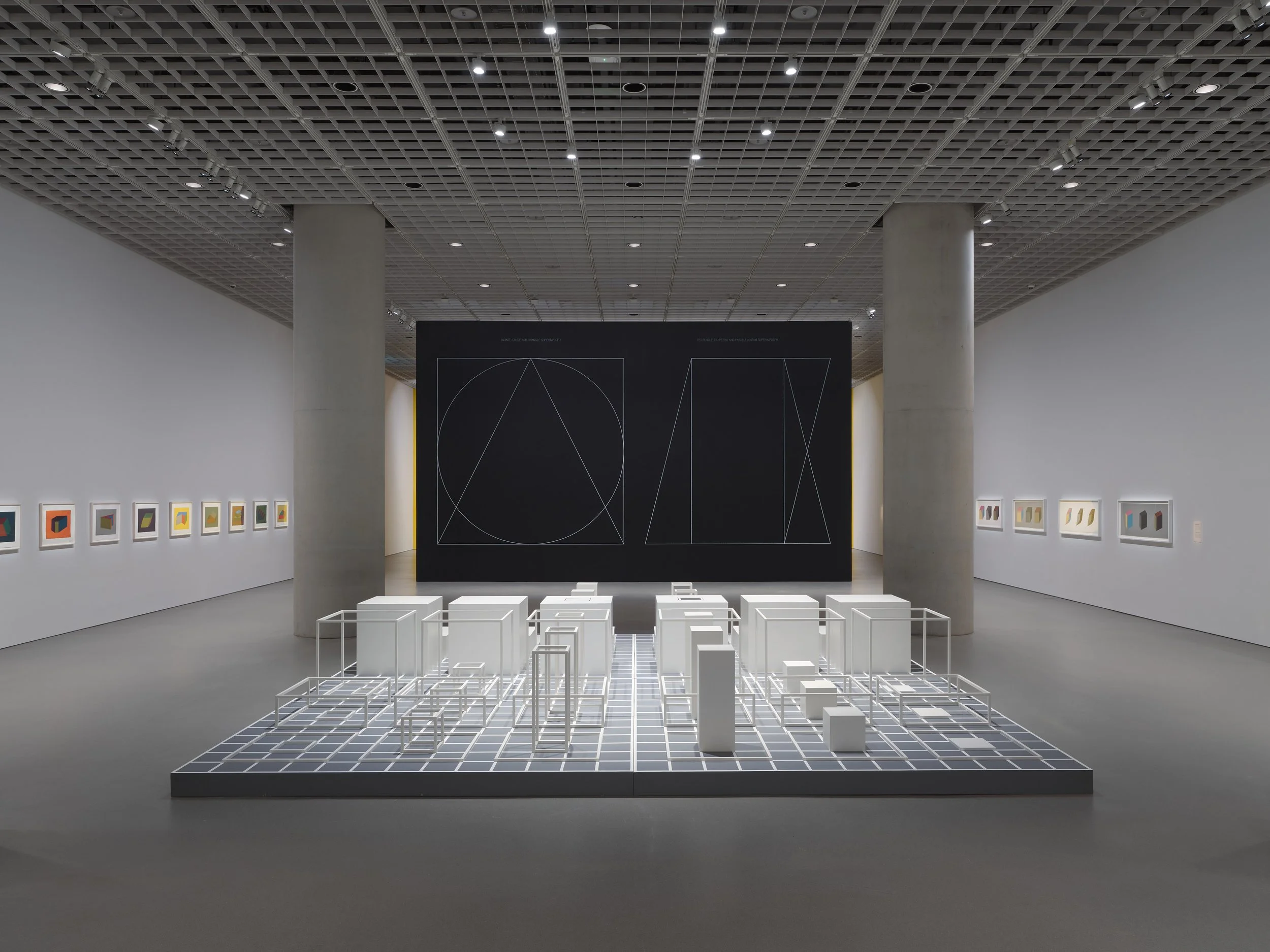
Courtesy of the LeWitt Estate and Amorepacific Museum of Art, Photo: Kyoungtae Kim
The artist gained notoriety by insisting his pieces could be realised by others (even in his lifetime) following his precise instructions. To collect the work often meant to collect the instructions. LeWitt’s stance that his role was to conceive the piece or series of pieces as a community event rather than as an ‘art commodity’. Although this was hotly debated during his lifetime, LeWitt’s steadfast adherence to his methodology is what endures today.
LeWitt post-humous exhibitions are overseen by the Sol LeWitt Estate and supported by New York’s Paula Cooper Gallery. His love of the cube, a square shape allowing for the serialisation of images remains the bedrock of his practice. The exhibition triumphs in conveying LeWitt’s sense of seriality and immediacy. The result is a large-scale wide-ranging presentation, with a strong message of advocating for new ways of making art.
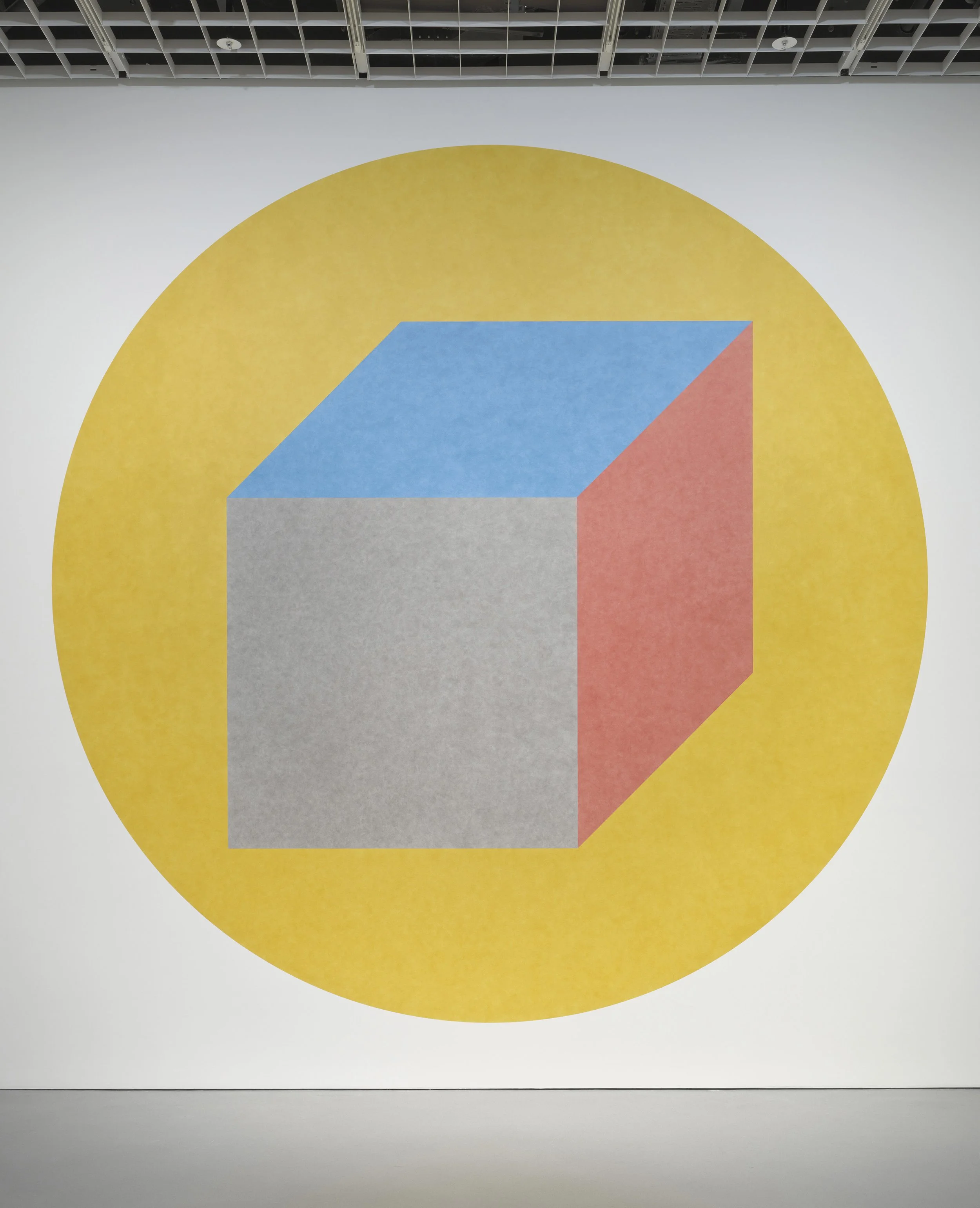
Wall Drawing #596, 1989
Colour ink wash
Courtesy of LeWitt Collection, Chester, Connecticut and Paula Cooper Gallery, New York. Courtesy of the LeWitt Estate and Amorepacific Museum of Art, Photo: Kyoungtae Kim
There is something both gratifying and disconcerting in seeing the late Sol LeWitt’s body of work, so comprehensively presented for the first time and to an unfamiliar audience in Seoul — it represents so much minimalistic and conceptual underpinnings, amidst an age of maximalism. There will always be potential risks of cross-cultural misunderstanding in the defense of LeWitt’s reasoning, as first developed amidst the late 1950’s and ‘60’s New York art scene alongside peers such like Eva Hesse, Dan Flavin, Robert Ryman, and Donald Judd. The issues LeWitt and these artists pondered — the emphasis on the individual’s ideas, and the space between conception and realisation — are still of vital importance today.
Meg Maggio is director of Pékin Fine Arts.