
Exhibiting Interconnectedness with the USC Pacific Asia Museum Himalayan Collection
Sonya S. Lee
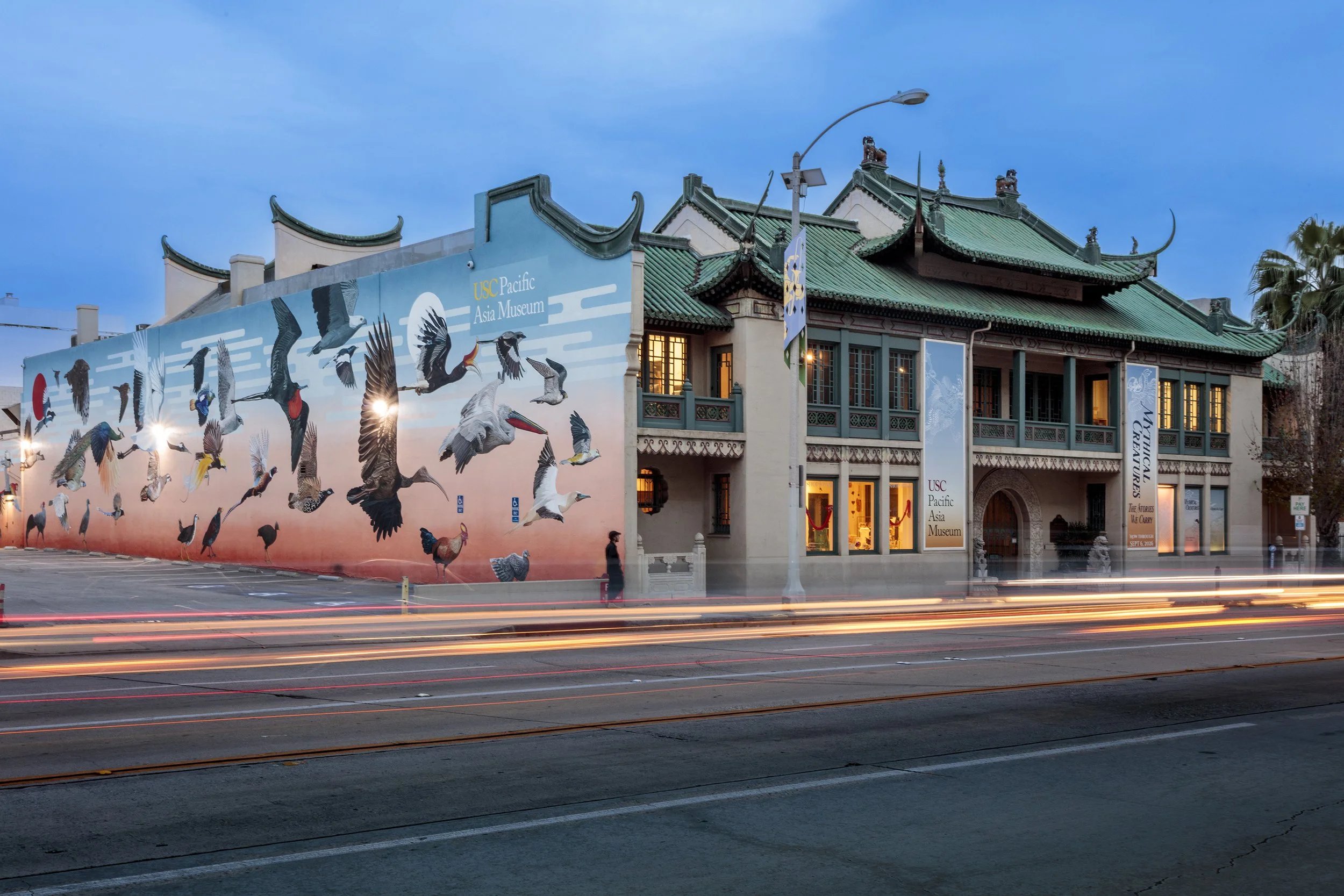
1. USC Pacific Asia Museum Building
USC Pacific Asia Museum
Photo: Joshua White/JW Pictures, 2025
The USC Pacific Asia Museum (PAM) in Pasadena, California, is home to a significant collection of Himalayan, Tibetan, and Inner Asian materials (fig. 1). In October 2026, a special exhibition opened at the museum to showcase notable works from this collection and will remain on view through 10 January 2027. Titled ‘We Are Connected: Highlights from the USC Pacific Asia Museum Himalayan Collection’, the exhibition was designed to coincide with ‘Gateway to Himalayan Art’, a traveling exhibition organized and sponsored by the Rubin Museum of Himalayan Art in New York that made a stop at PAM this past fall. The occasion marked the first time in over two decades that Himalayan objects from PAM were featured in dialogue with other works from the same region. The co-presentation with the Rubin show thus offered a unique opportunity to revisit this collection, which had remained little studied until then, while exploring new ways to present Himalayan art and cultures to the public in the twenty-first century. The Rubin show was a general introduction intended for college-level students as the target audience. Drawing on the knowledge and experience gained from exploring the exhibition, visitors could delve further into the subject’s richness and complexity through another interpretative portal offered by the PAM exhibit. Hence, ‘We Are Connected’ purposely adopted a single-theme approach with the aim to illuminate the ways in which inhabitants of the greater Himalayan region relate to each other as well as to the animals, plants, mountains, and spirits around them through art and material culture. The focus on the ideas and practices of interconnectedness calls attention to compositions, motifs, and artistic media unique to Tibetan, Nepalese, Bhutanese, Mongolian, and related Indian and Chinese cultural regions while reexamining the region’s rich visual art traditions through the lens of environmental humanities.
The choice of interconnectedness as the overarching theme for the PAM exhibition is an attempt at reimagining a collection that has been shaped by broader trends in collecting and exhibiting Himalayan art and cultures as they evolved in Southern California in the past half a century. The new interpretative framework decenters religion, which has dominated so many past exhibitions as the primary focus. Instead, ‘We Are Connected’ foregrounds the basic human need to connect with others, emphasizing the agency of individuals and the wider community in their search for ways to make connections and explain their meanings. With a narrative that shows Buddhist ideas and practices undergirding many aspects of life, the exhibition underscores the important role of religion in Himalayan art and societies. At the same time, the organizers also recognize the critiques of representing Asian cultures in museums largely through religious objects, which often resulted in stereotyping these cultures as exotic and backward (see Harris, 2012, and Rod-Ari, 2015). In response to these challenges, PAM features a diverse assemblage of objects spanning the past and the present as well as representing both secular and spiritual contexts. When presenting religious materials, attention is given to their multivalence beyond devotional and ritual functions. Moreover, exhibiting interconnectedness necessitates experimentation with display and storytelling strategies suited for introducing key concepts and debates in the environmental humanities to the viewing public.
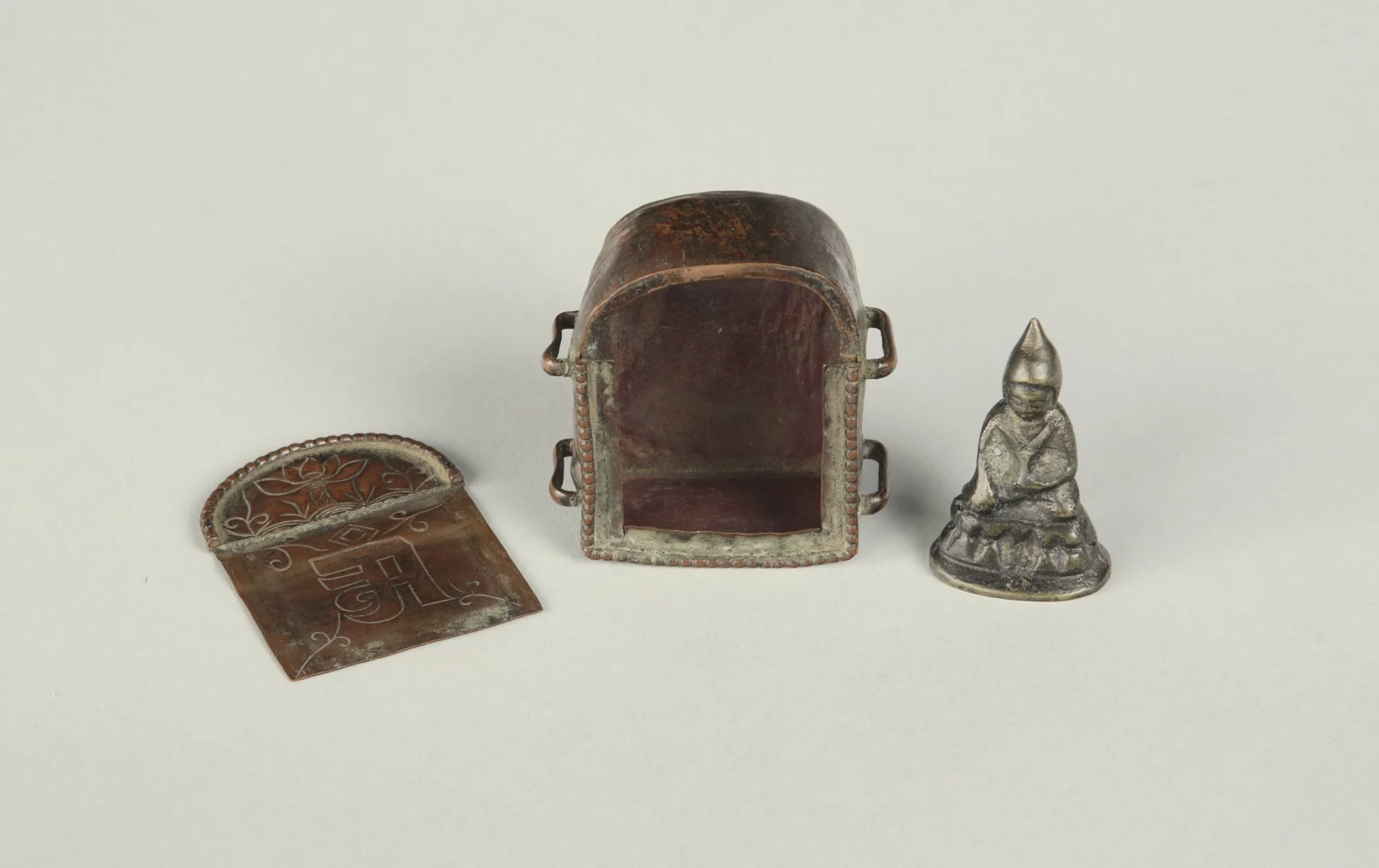
2. Traveling Shrine (gau) with a Seated Lama Figurine
Tibet, early 1920s
Bronze, copper; overall: height 5.08 cm, width 5.08 cm, depth1.905 cm
USC Pacific Asia Museum Collection, Gift of Miss Mabel Kay (1969.1.75)
The story of the PAM Himalayan Collection provides a helpful entry point for contextualizing ‘We Are Connected’. Since the museum’s founding, the greater Himalayan region has been one of its core areas of collection development. A small traveling shrine (known as gau in Tibetan) with an accompanying seated lama figurine (fig. 2) was donated to the museum in 1969, two years before the opening of its permanent location at the Grace Nicholson Building. This gift officially launched the museum’s Himalayan Collection, which would grow to encompass 490 works from Tibet, Nepal, and Bhutan. There are also a small number of objects from China and India with connections to Himalayan cultures that are not part of that collection. A case in point is ceramic wares produced in China for use in Tibetan Buddhist rituals (fig. 3). Most of the Himalayan objects were acquired through the collective efforts of dedicated donors and volunteers under the leadership of David Kamansky, museum director from 1977 to 2003. The collection continued to grow, though at a slower pace, after the museum formed a partnership with the University of Southern California in 2014.
Like other museums in North America with holdings of Himalayan materials, PAM has acquired objects of ethnographic interests as well as works with aesthetic appeal that befit major categories of fine art in the West such as painting and sculpture. In retrospect, all acquisitions from the first two decades of the collection belong to the first type, which included traveling shrines, ritual implements, and a set of fifty papier-mâché figurines representing different social classes in premodern Tibet. From the late 1980s to mid-2000s, the museum shifted its focus to the second type. Kamansky played a crucial role in that transition. Not only did he spearhead targeted purchases with funds pooled from museum supporters, but he also encouraged donors to buy certain objects upon his recommendation and then donate them to PAM. The works acquired during this period were not limited to quality scroll paintings and bronze sculptures alone, as efforts were made to fill gaps in the collection with iconic Tibetan objects such as skull cups while widening its scope by pursuing novelties among Himalayan art collectors at the time such as rugs and wood furniture.
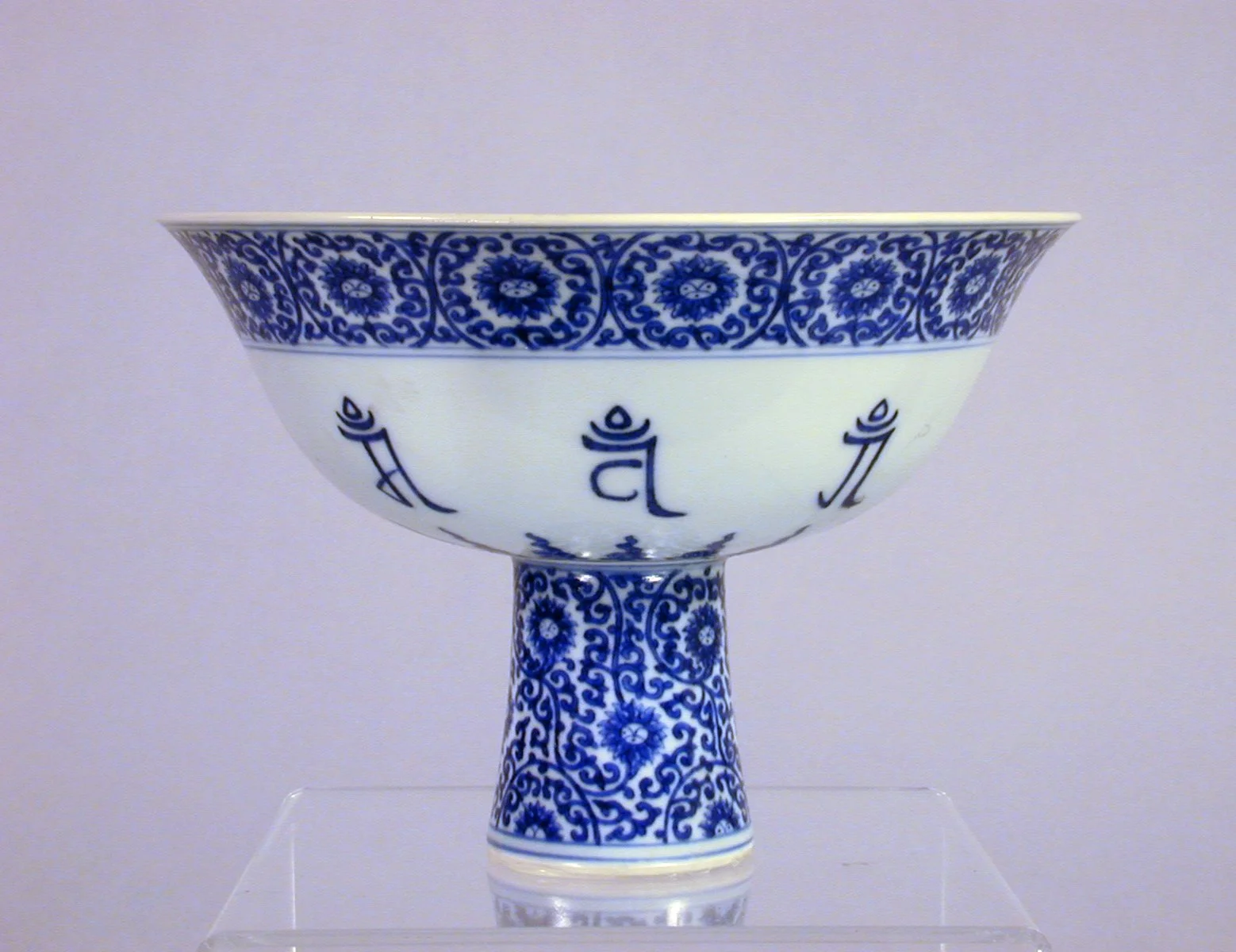
3.
Blue and White Stem Cup with Sanskrit Inscription
China, 1736–95
Porcelain, glaze; height 14 cm, diameter 15.88 cm
USC Pacific Asia Museum Collection, Gift of Mr. and Mrs. Robert M. Snukal (1996.44.24)
The development of the PAM Himalayan Collection in the suburbs of Los Angeles at the turn of the twenty-first century was specific to its time and place. When Kamansky first joined the museum board in the mid-1970s, he already sensed a strong interest in Tibetan Buddhism and culture among people in Southern California, which he attributed to the fallouts of the Vietnam War (personal communication with Kamansky). Another related development was the influx of immigrants from Asian countries to the United States after the passage of the Immigration and Nationality Act of 1965. Although these newcomers, many of whom chose to reside on the West Coast, did not play any active role in the formation of PAM or other Asian art collections in Los Angeles, their presence increased interest and a need to learn more about Asian cultures and histories in local communities (Rod-ari, 2015). Well-attuned to these factors, Kamansky sought out works that are aesthetically appealing and at the same time reveal different aspects of the cultures that produced them. To further intercultural understanding through the arts of Asia and the Pacific Islands and to act as a cultural resource for those with little knowledge of the region as well as for those with a cultural connection, have been the central mission of PAM since its inception.
By the time Kamansky and his supporters began to build the collections at PAM in earnest, Los Angeles had emerged as an important center of collecting and exhibiting Asian art in North America. The Los Angeles County Museum of Art (LACMA) laid the foundation with the purchase of the personal collection of famed art dealer Nasli Heeramaneck in 1969. In the ensuing two decades, this core would grow into a world-class collection of Indian, Southeast Asian, and Himalayan art under Pratapaditya Pal, the museum’s first curator of Indian and Islamic art. Pal oversaw the installation of permanent collections galleries for his department while organizing several major exhibitions with Pan-Asian themes that featured primarily Buddhist and Hindu art from premodern times. With the many high-quality works that were once part of the Heeramaneck collection, including rare scroll paintings from Western Himalayas, Pal was responsible for introducing to the public objects from Tibet and Nepal as a form of high art on par with the masterpieces from India.
By the last decade of the twentieth century, the Asian art scene in Southern California had changed significantly. Pal retired from LACMA in 1995 after twenty-five years of distinguished service. The industrialist Norton Simon, who built a world-class collection of Indian, Southeast Asian, and Himalayan art with Pal’s help during the 1970s, stopped collecting by the late 1980s. At PAM, Kamansky clearly saw a window of opportunity to expand the Himalayan Collection in ways that would sidestep unfavorable comparisons with his high-profile competitors.
Considering the museum’s small size and modest means, he would need to be more adventurous than Pal in his collecting and exhibiting strategies. This may explain why Kamansky remained focused on Tibet and Nepal rather than pivot toward Indian art, which would have been difficult to collect due to elevated prices for quality pieces precipitated by Simon’s entry into the Asian art market. Likewise, in organizing exhibitions on the Himalayan materials at PAM, Kamansky avoided religious art as the main theme and instead opted for the less familiar materials and topics that go beyond the narrow confine of fine arts and into the broader realm of material culture.
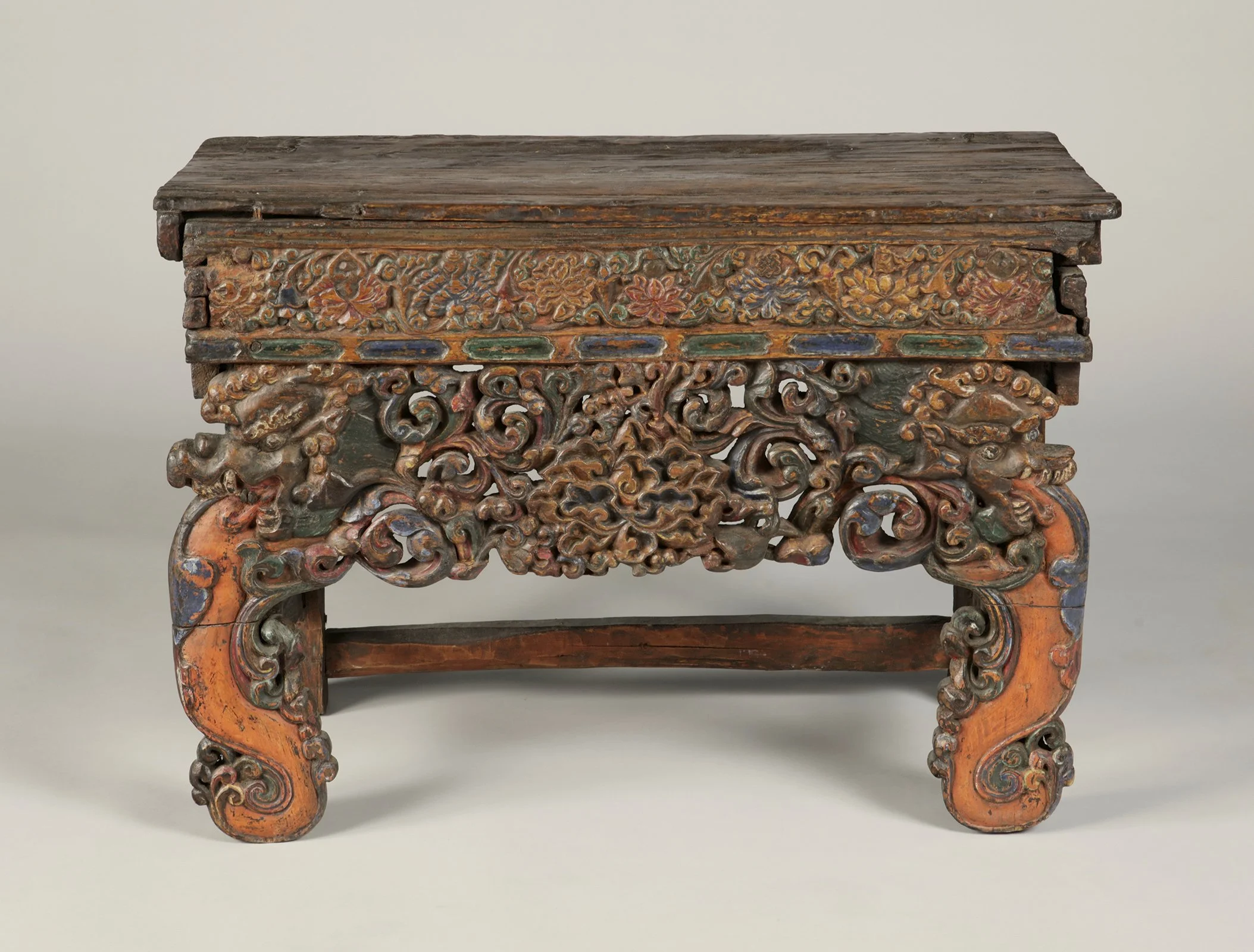
4. Table
Tibet, 15th to 17th century
Wood; mineral pigment; height 55.88 cm, width 81.28 cm, depth 39.37 cm
USC Pacific Asia Museum Collection, Museum Purchase with funds provided by the Collectors’ Circle (2003.37.1)
The culmination of Kamansky’s decades-long efforts was ‘Wooden Wonders: Tibetan Furniture in Secular and Religious Life’, one of the most ambitious exhibitions ever mounted at PAM. Curated by Kamansky himself, the show opened in November 2004, featuring over 148 works from more than twenty private collections as well as five museums; it was accompanied by an academic symposium and a full catalogue. By all measures, the exhibition was a personal triumph for Kamansky, as it affirmed his foresight in pursuing an important but neglected area of collecting and his ability to mount groundbreaking exhibitions like this. One of the highlights in the exhibition was a Tibetan table with a deeply carved front dating to the 15th to 17th century (fig. 4), which the museum purchased a year earlier. Tables of this type were typically placed in front of the thrones of senior lamas in their private apartments at a monastery or in front of raised seats of aristocrats in the chapels of their residences.
In addition to ‘Wooden Wonders’, PAM installed a permanent gallery for Himalayan art in 2004 with a regular display of objects from the collection (fig. 5). Until the gallery was deinstalled in 2024 for another exhibition, the museum had made available approximately 132 objects to its visitors over the past two decades.
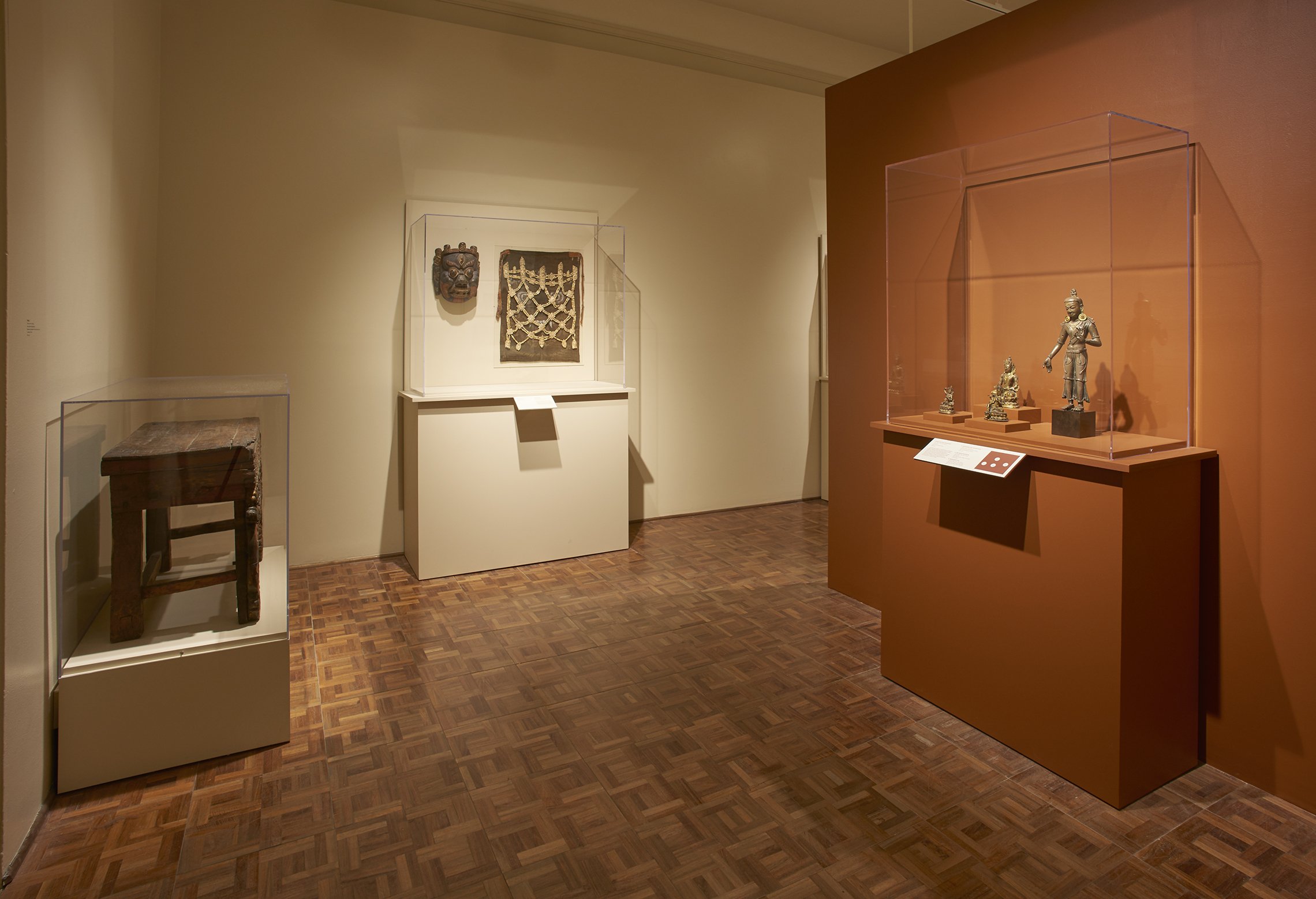
5. Art of Himalaya Gallery Installation Shot
USC Pacific Asia Museum
Photo: Peter Perigo, 2018
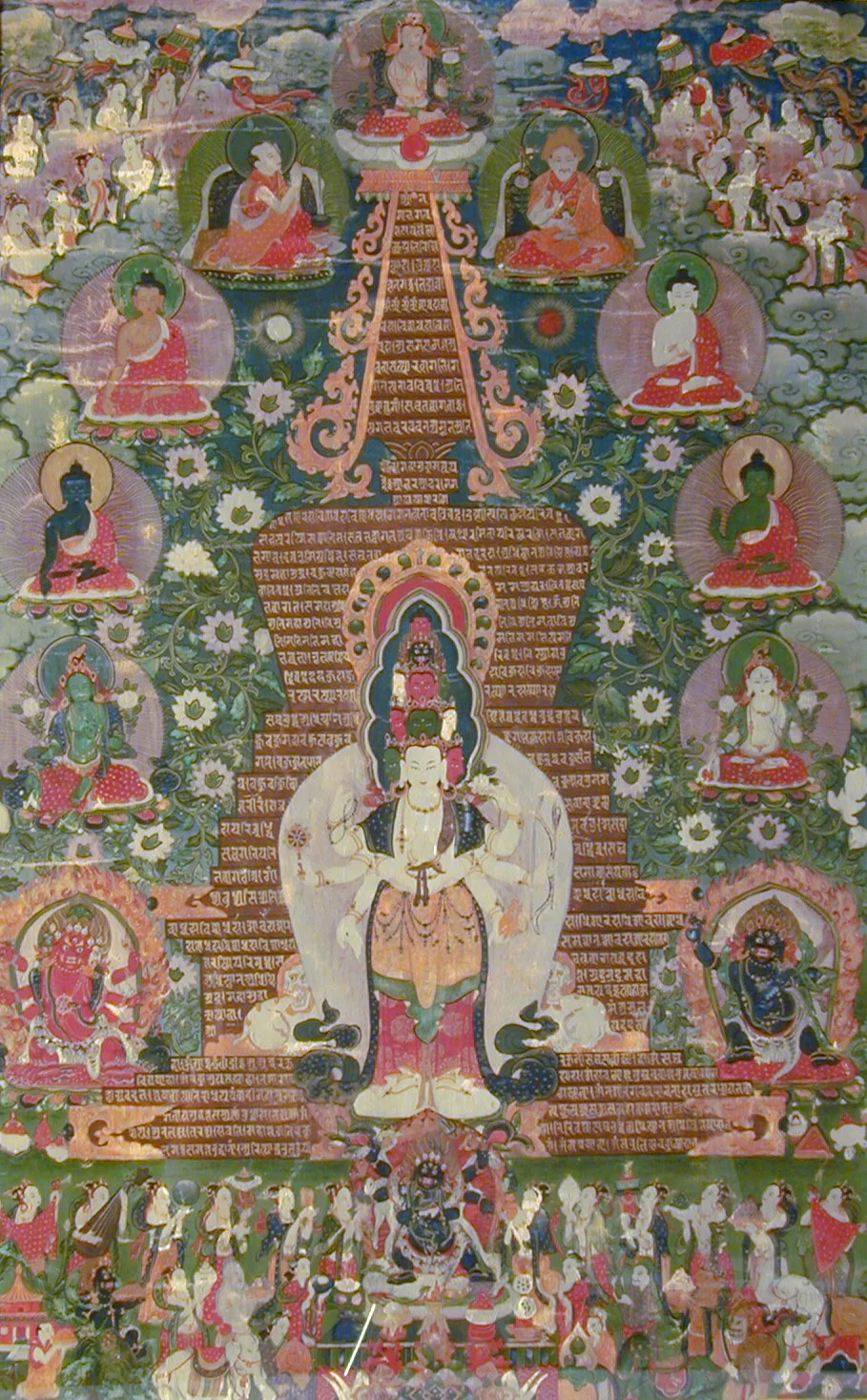
6. Eleven-faced, Eight-Armed Avalokiteshvara
Northern China or Amdo region, late 18th century
Ink; cotton; framed: height 97.79 cm, width 65.72 cm; image: height 70.49 cm, width 44.45 cm
USC Pacific Asia Museum Collection, Museum Purchase (1989.7.1)
‘We Are Connected’ is the first special exhibition on Himalayan materials at PAM in more than twenty years since ‘Wooden Wonders’. Of the forty-two objects in the presentation, all from the museum’s own collection, sixteen are exhibited for the first time. They have been selected to illuminate the theme of interconnectedness, which manifests chiefly through the physical or symbolic interactions between different beings, both human and nonhuman, real and imagined. The viewers were often active participants in these interactions as they handled and looked at these objects in rituals, communal activities, and privately. When depicting contact and bonding in material mediums, artists and patrons invariably embraced a willingness to give up seeing themselves as unique and dominant in their relationships with others. This commitment to detachment is central to the Buddhist notion of impermanence as it is to today’s ecological thinking. The openness to think big, as Timothy Morton argues, is to see the world from a decentered, non-anthropocentric position, from the impossible viewpoint so to speak (Morton, 2010). The people of the Himalayas have long understood this impossible viewpoint on the roof of the world. Knowing the benefits of detachment from their own exceptionalism, they have integrated these lessons into their ways of life with imagination and purpose.
To present multiple stories about interconnectedness, the exhibition is organized into three sections, each representing a major setting for making connections. The first is the ‘Cosmos’ with five thangka paintings dating from the late 14th to 19th centuries. These works exemplify distinct compositions that imagine humans as part of a cosmological realm full of beings of different kinds, transcending time and space. In these works, humans are shown to exist in a system of interconnected hierarchy where powerful Buddhist deities reign supreme. At the same time, they are offered the means by which to transform themselves into buddhas and bodhisattvas. One such example can be found in the Eleven-faced, Eight-Armed Avalokiteshvara, which features a large stupa inscribed with the Ushinishavijaya Dharani as the setting for the main deity (fig. 6).
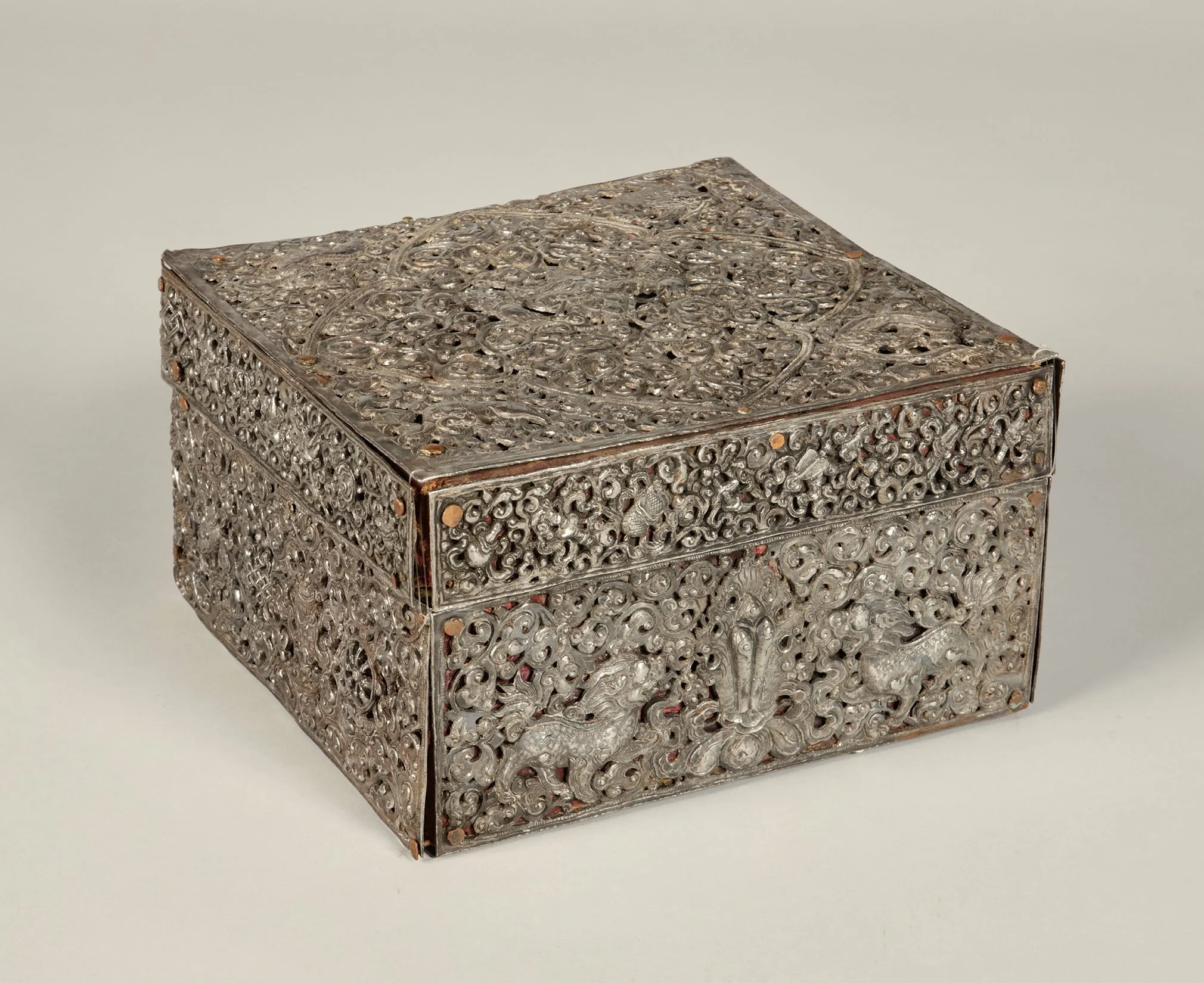
7. Ritual Box with Lid
Tibet, 2nd half of 19th century
Wood, silver, pigment; height 15.56 cm, width 27.94 cm, depth 24.77 cm
USC Pacific Asia Museum Collection, Gift of Donald & Lynne Alschuler, Judy Cohen & Gaston Araya, Annie Dorsey, Dorothy Gregor, David Gunther, and Elizabeth Pomeroy in Honor of David Kamansky (2004.4.1AB)
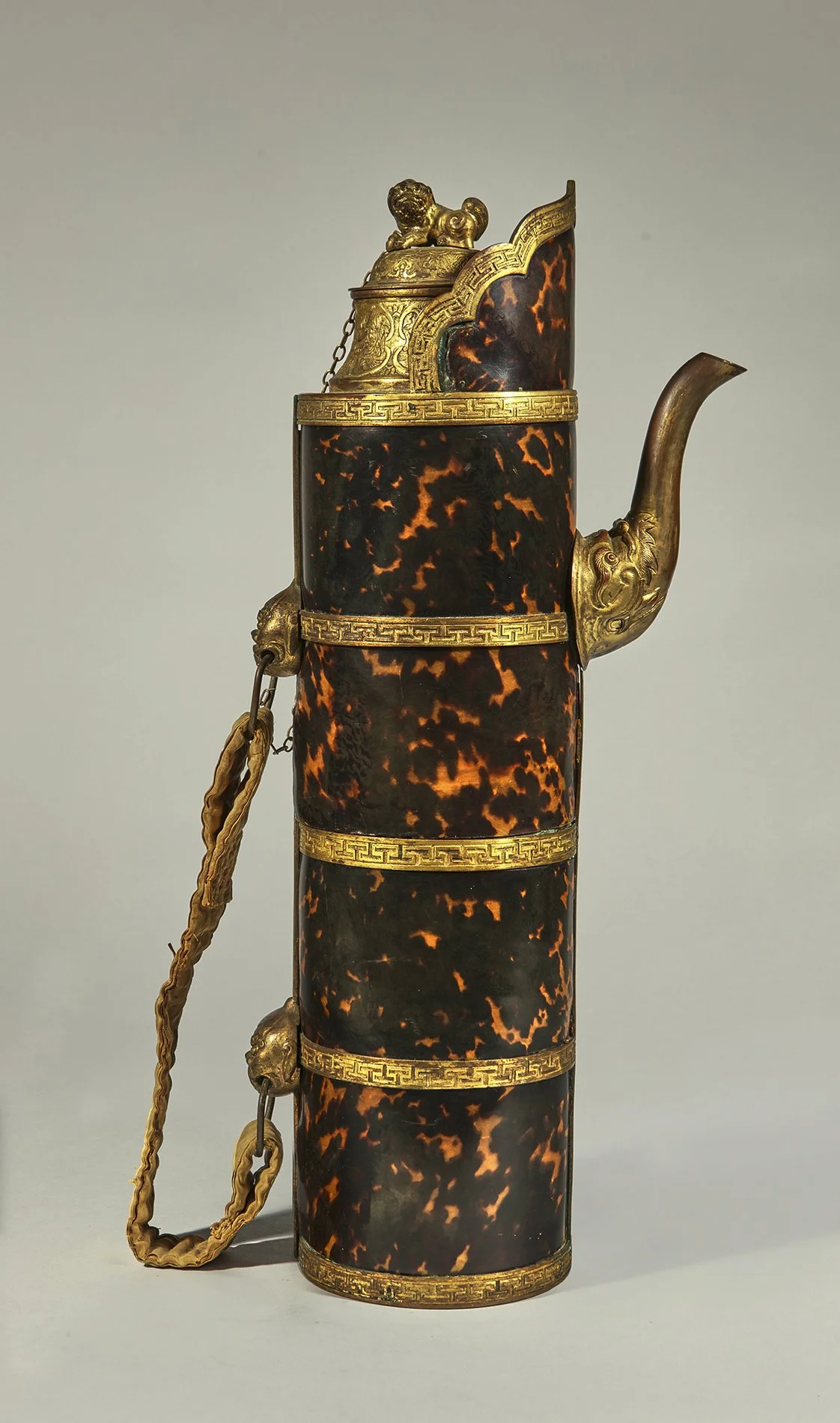
8. Ewer
Tibet, circa 1650
Clay; copper; enamel; shell; overall: height 48.26 cm, width 20.32 cm
USC Pacific Asia Museum Collection, Museum Purchase with funds provided by Mr. and Mrs. Jack Lydman and the Collectors’ Circle (1995.14.2)
The second section ‘Play’ conjures the setting at Buddhist monasteries where people across the Himalayas would gather regularly for festivals, religious ceremonies, and communal celebrations. Objects of different types are used on these occasions to facilitate communication between humans, ancestors, and deities through art, music, dance, and storytelling. The works featured in this section highlight a wide range of designs in the form of fantastical plants and mythical creatures. The Ritual Box with Lid (fig. 7) and the Bone Apron, each richly decorated with such images, demonstrate the creative use of diverse mediums as material support for such interactions.
In the third section ‘Out of the Ordinary’, the inextricable bond between animals and humans is explored through a range of utilitarian objects that once shaped the look of domestic spaces across the greater Himalayan region. Imagining animals as manifestations of powerful forces in life and acknowledging one’s vulnerability in their presence is one way of exercising compassion. This is one of the reasons why Garuda, Ganesha, and other deities in hybrid bodies are especially popular as icons for personal devotion. Their zoomorphic attributes are evoked in a variety of objects in unexpected ways. To help visitors see a deeper connection among works beyond obvious differences in function and object type, the exhibit presents dissimilar objects with common design elements together. A case in point is the pairing of a bronze statue of Ganesha with an ewer featuring a sprout in the shape of an elephant trunk (fig. 8).
To amplify the various stories about interconnectedness across the three sections, the exhibition relies on display strategies that can increase the visitor’s curiosity about the objects on view. In addition to provocative juxtapositions of works with similar design elements, projecting enlarged details of objects onto the gallery wall is another way of encouraging attentive looking. The projected images afford the visitors an opportunity to appreciate the intricacy of design that they may overlook in their first encounter with the objects. More broadly, when the visitors encounter these projected images, they may become more conscious of the contrast in size between the details and the actual objects. This heightened awareness contributes to how humans perceive scale by using their own body as a reference point in relation to material things. It is also conducive to cultivating a sense of detachment from the self, which is as crucial to today’s ecological thinking as it is to the people’s outlook on life in the Himalayas.
By telling the story of PAM Himalayan Collection through the theme of interconnectedness, We Are Connected invites the viewers to think more deeply about how they interact and relate to each other as well as to their surroundings and inner spaces. Learning about an unfamiliar part of the world is a step toward self-discovery.
Sonya S. Lee is Professor of Art History, East Asian Languages and Cultures, and Religion at the University of Southern California and the guest curator of ‘We Are Connected: Highlights from the USC Pacific Asia Museum Himalayan Collection’. The author wishes to thank Annie Lee, Linda Boot, and Courtney Crane for their assistance in the research and writing of this article.
Selected bibliography
Clare E. Harris, The Museum on the Roof of the World: Art, Politics, and the Representation of Tibet, Chicago: The University of Chicago Press, 2012.
David Kamansky, ed., Wooden Wonders: Tibetan Furniture in Secular and Religious Life, Pasadena: Pacific Asia Museum; Chicago: Serindia Publications, 2004.
Timothy Morton, The Ecological Thought, Cambridge: Harvard University Press, 2010.
Melody Rod-ari, ‘The Pacific Rim: Connecting peoples, Collecting histories: The Formation of South and Southeast Asian Art Collections in Los Angeles’, Journal of the History of Collections 28, no. 3 (November, 2016), 479–492.